How to use this resource: A collection of past assessment tests, provided for personal practice. For personalised support, Get Matched →
Clinical Decision-Making Academic Poster Assignment Brief
Assignment title: Clinical Decision-Making in the Management of a Hypertensive Emergency
Assignment task
You are required to produce a one-page academic poster that critically discusses the clinical decision-making involved in the assessment, treatment and discharge planning of a patient experiencing a hypertensive emergency. Your poster should demonstrate an understanding of the patient’s pathophysiology, prescribed medication, ethical principles, person-centred care and your learning from the clinical situation.
Case scenario
Ken is a 48-year-old man of Caribbean heritage who was admitted to the emergency ward with a hypertensive emergency. In accordance with the Nursing and Midwifery Council Code, the patient’s name has been changed to maintain confidentiality.
An A–E assessment was completed to identify immediate threats to Ken’s health. His blood pressure was 230/180 mmHg. He reported a severe headache, dizziness and chest pain. His wife stated that Ken had not been taking his prescribed antihypertensive medication consistently because friends had told him that long-term blood pressure medication could cause erectile dysfunction. His remaining observations were within normal limits.
Following medical assessment, intravenous labetalol hydrochloride was prescribed and administered to reduce Ken’s blood pressure safely. Before discharge, Ken was advised about medication adherence, lifestyle modification and the importance of ongoing blood pressure monitoring.
Poster requirements
The poster must be presented on one page and should contain approximately 1,050 words. The writing should be concise, academically informed and suitable for a professional nursing audience. Information should be arranged under the following sections.
Introduction and patient overview
Briefly introduce the purpose of the poster and summarise Ken’s presentation. Explain why the situation required urgent clinical decision-making. State that a pseudonym has been used to protect confidentiality in accordance with the NMC Code.
Pathophysiology of hypertensive emergency: approximately 300 words
Explain the difference between severe hypertension and a hypertensive emergency. Discuss how extremely elevated blood pressure can cause endothelial injury, impaired autoregulation, vascular resistance and reduced tissue perfusion. Relate these processes directly to Ken’s symptoms of headache, dizziness and chest pain.
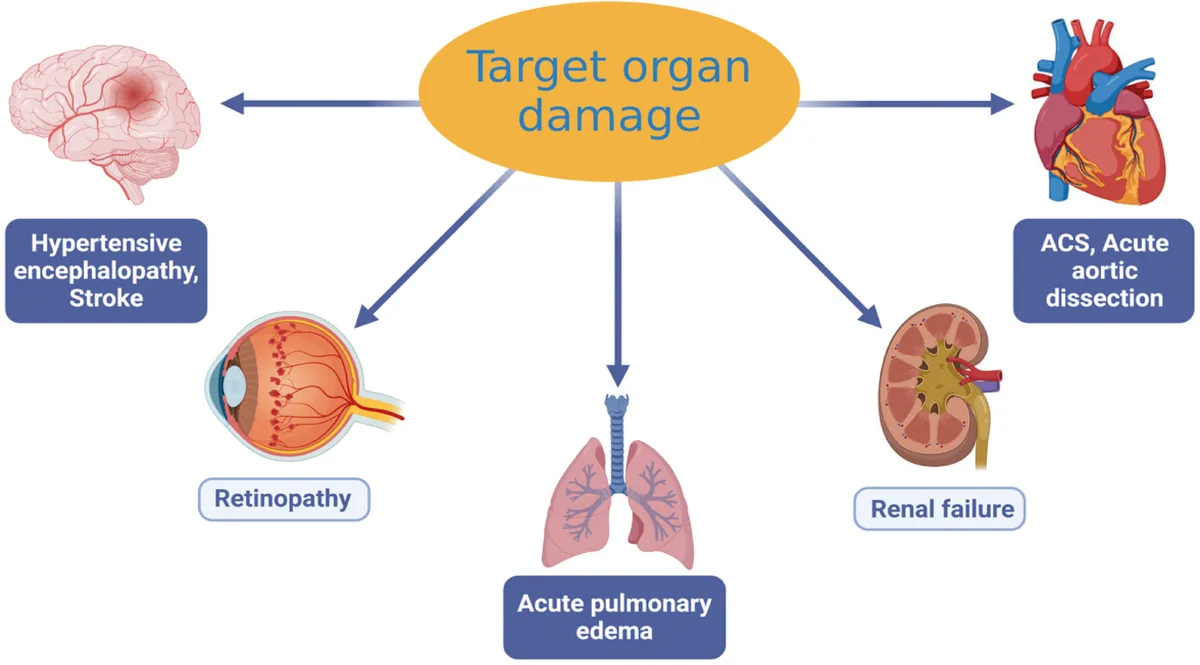
Critically examine the possible effects of uncontrolled hypertension on the brain, heart, kidneys and blood vessels. Explain why urgent assessment for acute target-organ damage was necessary. Relevant investigations may include an electrocardiogram, blood tests, renal function tests, urinalysis, fundoscopy, neurological assessment and cardiac biomarkers.
The discussion should connect the underlying pathophysiology to Ken’s clinical presentation rather than providing only a general description of hypertension.
Pharmacology of labetalol hydrochloride: approximately 200 words
Explain the pharmacological action of labetalol as an alpha- and beta-adrenergic receptor blocker. Discuss how its actions reduce peripheral vascular resistance, heart rate and blood pressure.
Explain why intravenous labetalol may be selected during a hypertensive emergency. Consider its onset of action, administration route, clinical advantages and possible contraindications.
Discuss the nursing responsibilities associated with its administration, including frequent blood pressure monitoring, cardiac monitoring, assessment of consciousness and observation for adverse effects such as hypotension, bradycardia, dizziness, bronchospasm or nausea. Explain why blood pressure must be reduced gradually rather than normalised immediately.
Clinical decision-making and ethical principles: approximately 400 words
Critically analyse the decision to administer intravenous labetalol. Explain how Ken’s blood pressure, symptoms and risk of acute organ damage informed this decision. Consider whether the treatment was proportionate, evidence based and appropriate for his condition.
Apply a recognised clinical decision-making model or systematic assessment approach. You may discuss the A–E assessment, clinical judgement, recognition of deterioration, escalation of care and continuous reassessment. Explain how the effectiveness of treatment should be evaluated.
Discuss the ethical principles of autonomy, beneficence, non-maleficence and justice. Ken has the right to make decisions about his medication, but healthcare professionals must ensure that his decisions are based on accurate information. Explore how the nurse should address his concerns about erectile dysfunction without dismissing or judging him.
Discuss person-centred communication and shared decision-making. Consider Ken’s cultural background, health beliefs, medication concerns and possible influence from friends. Explain how open questions, active listening, non-judgemental communication and teach-back could be used to assess understanding.
Consider the importance of involving Ken in developing a realistic discharge plan. This may include medication review, discussion of potential adverse effects, referral to his general practitioner, home blood pressure monitoring, dietary advice, physical activity, smoking or alcohol support where relevant, and clear information about warning signs requiring urgent medical attention.
Learning experience: approximately 150 words
Reflect on what you learned from the clinical situation. Identify the knowledge and skills that were strengthened, including recognising deterioration, completing an A–E assessment, understanding antihypertensive medication, communicating about sensitive concerns and supporting medication adherence.
Explain what you would do differently or develop further in future practice. Your reflection should demonstrate insight rather than simply describing events. You may use a recognised reflective model, although the model does not need to be explained in detail.
Evidence requirements
The poster must be supported by current and relevant evidence. Use peer-reviewed journal articles, clinical guidelines, professional standards and authoritative healthcare sources. Most references should have been published within the last five years, although older landmark sources may be used where appropriate.
The NMC Code should be used when discussing confidentiality, professional responsibility, communication and person-centred care. Clinical recommendations should be supported by appropriate guidance on hypertension and hypertensive emergencies.
All sources must be cited within the poster, and a reference list must be included. Use the referencing style required by the university.
Academic expectations
The poster should demonstrate critical analysis rather than relying only on description. Each section should connect evidence to Ken’s specific situation. Statements about treatment, assessment, medication, ethics and discharge planning must be supported by literature.
The work should show accurate clinical knowledge, logical organisation, professional language, appropriate terminology and clear links between assessment findings, clinical decisions, interventions and patient outcomes.
Submission requirements
Submit the completed poster as one page in the file format specified by the module team. Ensure that all text is readable and that the poster remains clear when viewed electronically. Include your student number, module title, module code and final word count. Do not include information that could identify a real patient or clinical placement area.
The assessment will consider knowledge and understanding, use of evidence, critical analysis, reflection, structure, writing accuracy and referencing
Clinical Decision-Making
Hypertensive Emergency
Academic Poster
Emergency Nursing
Labetalol
A-E Assessment
Nursing Ethics
Person-Centred Care
NMC Code
Discharge Planning
GET SUPPORT WITH YOUR CLINICAL DECISION-MAKING ACADEMIC POSTER
/get-support?topic=clinical-decision-making-hypertensive-emergency-poster