How to use this resource: A collection of past assessment tests, provided for personal practice. For personalised support, Get Matched →
FUNDAMENTAL SKILLS FOR PERSON- AND FAMILY-CENTRED CARE
ASSIGNMENT TASK
-
Choose one member of the family presented in the module.
-
Discuss the appropriate communication and assessment skills required to facilitate person-centred care for the selected family member.
-
Explain the nurse’s professional responsibility when assessing and communicating with the patient.
DETAILED ESSAY INSTRUCTIONS
Introduction — Approximately 150 Words
The introduction should:
-
Explain what will be discussed in the essay.
-
Introduce the selected patient.
-
Provide a brief background of the patient.
-
Clearly state that the patient is fictitious.
-
Explain that the patient has attended the Accident and Emergency Department following a scald injury to the right arm.
Main Body — Approximately 1,200 Words
The main body should address the following areas:
1. The Nursing Process and Accurate Assessment
-
Describe the stages of the nursing process.
-
Explain why an accurate nursing assessment is essential for this patient.
-
Demonstrate how assessment findings inform planning, implementation, and evaluation of care.
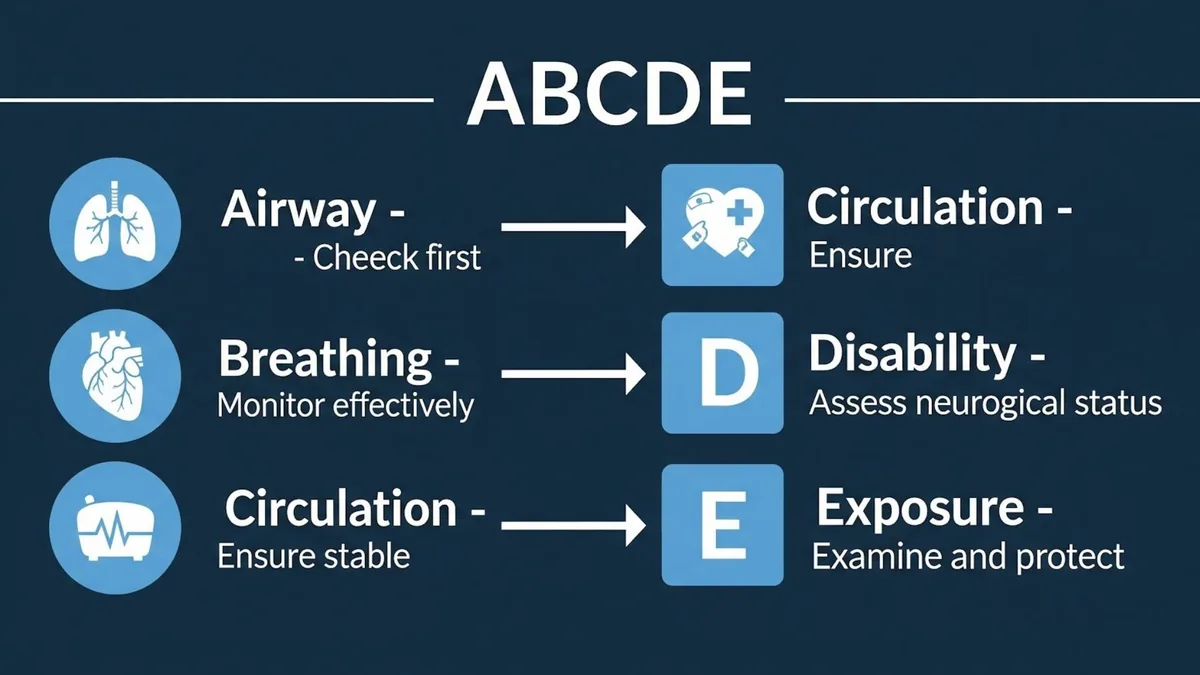
2. The A–E Assessment
-
Explain the meaning and purpose of the A–E assessment:
-
A — Airway
-
B — Breathing
-
C — Circulation
-
D — Disability
-
E — Exposure
-
-
Explain why this systematic assessment is important for a patient presenting with a scald injury.
-
Discuss the importance of recognising and escalating any immediate concerns.
3. Holistic Assessment
-
Explain why the initial A–E assessment should be followed by a holistic assessment.
-
Consider the patient’s:
-
Physical health
-
Psychological well-being
-
Social circumstances
-
Cultural background
-
Communication needs
-
Family involvement
-
Emotional response to the injury
-
4. Relevant Assessment Tools
Examine two assessment tools that are relevant to the selected patient.
The discussion should include:
-
The purpose of each tool.
-
How each tool is used.
-
Why each tool is appropriate for the patient.
-
The difference between subjective and objective information.
-
Examples of subjective data provided by the patient.
-
Examples of objective data observed or measured by the nurse.
5. Communication Skills
Discuss why effective communication is essential when caring for the patient.
The discussion should include:
-
Active listening
-
Verbal communication
-
Non-verbal communication
-
Open and closed questions
-
Clarification
-
Empathy
-
Appropriate eye contact
-
Tone of voice
-
Providing information clearly
-
Checking the patient’s understanding
-
Adapting communication to the patient’s age, cognitive ability, emotional condition, cultural background, language, neurodiversity, and health needs
-
Recognising and managing possible barriers to communication
6. Therapeutic Relationships
-
Define a therapeutic relationship.
-
Explain how effective communication contributes to the development of trust.
-
Discuss why a therapeutic relationship is important when assessing and caring for the patient.
-
Explain the importance of maintaining professional boundaries.
7. Professionalism and Professional Responsibility
Discuss professionalism within nursing and explain how it applies to the selected patient.
The discussion must address:
-
Consent
-
Mental capacity
-
Professional competence
-
Accurate documentation
-
Confidentiality
-
Privacy and dignity
-
Accountability
-
Duty of care
-
Evidence-based practice
-
Escalation of concerns
-
Working within professional limitations
-
Reflection and continuing professional development
This section must be clearly linked to the Nursing and Midwifery Council’s Code. Failure to recognise and discuss the NMC as the governing professional body may result in a failed assignment.
Conclusion — Approximately 150 Words
The conclusion should:
-
Summarise the main issues discussed in the essay.
-
Reinforce the importance of systematic and holistic assessment.
-
Emphasise the importance of effective communication and therapeutic relationships.
-
Restate the nurse’s professional responsibilities.
-
Avoid introducing new evidence or ideas.
REFERENCE LIST
-
Provide a complete reference list at the end of the assignment.
-
Follow the required APA referencing system.
-
Ensure that every source cited in the essay appears in the reference list.
-
Ensure that every source in the reference list has been cited within the essay.
-
Use current and reliable supporting evidence throughout the assignment.
USE OF ARTIFICIAL INTELLIGENCE
This assignment is classified as amber-rated for the use of Artificial Intelligence.
Artificial Intelligence may be used for:
-
Checking spelling
-
Checking grammar
-
Improving sentence structure
-
Supporting the organisation and structure of the essay
Any use of AI must be acknowledged on the cover page. The acknowledgement should identify:
-
The AI tool used.
-
The purpose for which the tool was used.
-
How the student reviewed and revised the AI-assisted content.
SUBMISSION INSTRUCTIONS
-
Submit the assignment through Turnitin using the link in the assignment tab on the AULA page.
-
Submit the assignment as a Microsoft Word document.
-
The required word count is 1,500 words, plus or minus 10%.
-
The assignment must contain no fewer than 1,350 words and no more than 1,650 words.
-
Use double-line spacing throughout the assignment.
-
Write in the third person.
-
Use Arial or Calibri, font size 12.
-
Use supporting evidence throughout the essay.
-
Follow the required APA referencing system.
-
The word count begins with the first word of the essay and ends immediately before the reference list.
-
Include an acknowledgement of any AI use on the cover page.
DEVELOPMENT OF SKILLS AND ATTRIBUTES
Communicate Effectively
Students will experience and apply different methods of communication to support people effectively in their care.
Act with Integrity
Students will be introduced to the NMC Code and understand the responsibility to behave professionally at all times.
Adapt Their Approach
Students will learn to adapt patient assessments according to individual circumstances, including:
-
Age
-
Cognitive ability
-
Neurodiversity
-
Physical health
-
Mental health
-
Communication needs
-
Personal preferences
Think Creatively
Students will consider appropriate and individualised approaches to patient assessment, communication, and care.
Get Things Done
Students will learn how to assess a patient safely and promptly while recognising the need to escalate concerns appropriately.
MARKING AND FEEDBACK
How Will the Assignment Be Marked?
The assignment will be marked by the module teaching team.
How Will Grades and Feedback Be Provided?
-
Provisional marks will be released after internal moderation has taken place.
-
Feedback will be provided by the module team.
-
Once marks have been released, feedback can be accessed through the same link used to submit the assignment.
-
General feedback may be provided alongside comments included within the submitted work.
-
Provisional marks and feedback should normally be available within three weeks or 15 working days.
MODULE LEARNING OUTCOMES
The following learning outcomes will be assessed through this assignment:
Learning Outcome 1
Explain and apply best-practice approaches to assessing the mental and physical health and well-being of people across the lifespan.
Learning Outcome 2
Demonstrate knowledge of and apply the core communication skills required to develop relationships with adults and children at different developmental stages and across different care settings.
This includes recognising potential barriers to communication with people across the lifespan.
Learning Outcome 3
Explain and apply the relevant platforms for professional accountability and recognise the nurse’s professional responsibility to fulfil these requirements through reflection and continuing professional development.
ASSIGNMENT SUPPORT AND ACADEMIC INTEGRITY
Spelling, Punctuation, and Grammar
Students are expected to use effective, accurate, professional, and appropriate language throughout the assessment.
Academic Integrity
The submitted assignment must be the student’s own work or, where applicable, the work of the identified group.
All sources of information must be properly acknowledged and referenced. Any tools used in producing the assignment must also be identified.
The university uses detection software and carries out routine checks for possible academic misconduct.
Students are responsible for maintaining evidence showing how their ideas and written work developed before submission. Appropriate evidence may include:
-
Version-controlled documents
-
Developmental drafts
-
Sketchbooks
-
Reflective journals
-
Planning notes
-
Research records
This evidence may be requested where academic misconduct is suspected.
When Artificial Intelligence tools are used in developing the assignment, the student must clearly identify:
-
Which AI tools were used.
-
How the tools were used.
-
Which parts of the assignment were supported by AI.
-
How the final work was reviewed and revised by the student.
This information must be acknowledged in the final submission.
Before submitting, confirm that the assignment:
- Is between 1,350 and 1,650 words.
- Uses Arial or Calibri, size 12.
- Is double-spaced.
- Is written in the third person.
- Introduces the fictitious patient and the right-arm scald injury.
- Explains the nursing process.
- Discusses the A–E assessment.
- Includes a holistic assessment.
- Examines two relevant assessment tools.
- Includes subjective and objective patient data.
- Discusses appropriate communication skills.
- Explains the therapeutic relationship.
- Addresses consent, competence, documentation, and confidentiality.
- Clearly links professional responsibilities to the NMC Code.
- Uses appropriate supporting evidence.
- Follows APA referencing.
- Includes an AI acknowledgement on the cover page.
- Has been proofread before submission.
- Is saved and submitted as a Microsoft Word document.