How to use this resource: A collection of past assessment tests, provided for personal practice. For personalised support, Get Matched →
Mental Health Case Scenario Report Assignment Guide
Student Assignment Brief
Assignment Title
Report of a Case Scenario
Assignment Task
Write a 2,000-word report outlining the assessment and care planning required to support the physical and mental health needs of a mental health service user.
The report must be based on a service user from your current practice placement and should address the four assessment criteria provided below. The service user must remain central to the discussion throughout the report. You are not being asked to write a general essay about mental health theories.
Selecting a Service User
Select a service user from your current placement.
The service user may have any diagnosis, but they should experience one or more of the symptoms or health needs covered within the module.
Before selecting the service user:
- Seek advice from your Practice Assessor.
- Gain consent from the service user.
- Protect the service user’s confidentiality.
- Use a pseudonym throughout the report.
- Remove or change any information that could identify the service user, carers, staff members, placement area or organisation.
The assignment guidance specifically requires students to gain consent and avoid using identifiable information.
Recommended Assignment Structure
Cover Page
The cover page should include:
- Module name and module code
- Module leader
- PTG leader
- Student number
- Assignment title
- Word count
Do not include your name if anonymous marking is required.
Introduction
Begin with a concise introductory paragraph.
The introduction should:
- State the purpose of the report.
- Briefly introduce the service user and their current involvement with mental health services.
- Confirm that consent was obtained.
- Explain that a pseudonym and altered identifying details have been used to maintain confidentiality.
- Outline how the report will address the four assignment criteria.
Avoid providing an unnecessarily lengthy description of the service user.
Criterion 1: Service-User Formulation
Present a formulation of the service user using a recognised model.
The formulation must demonstrate how information collected during assessment helps explain the factors contributing to the service user’s mental health problems.
Appropriate formulation models may include:
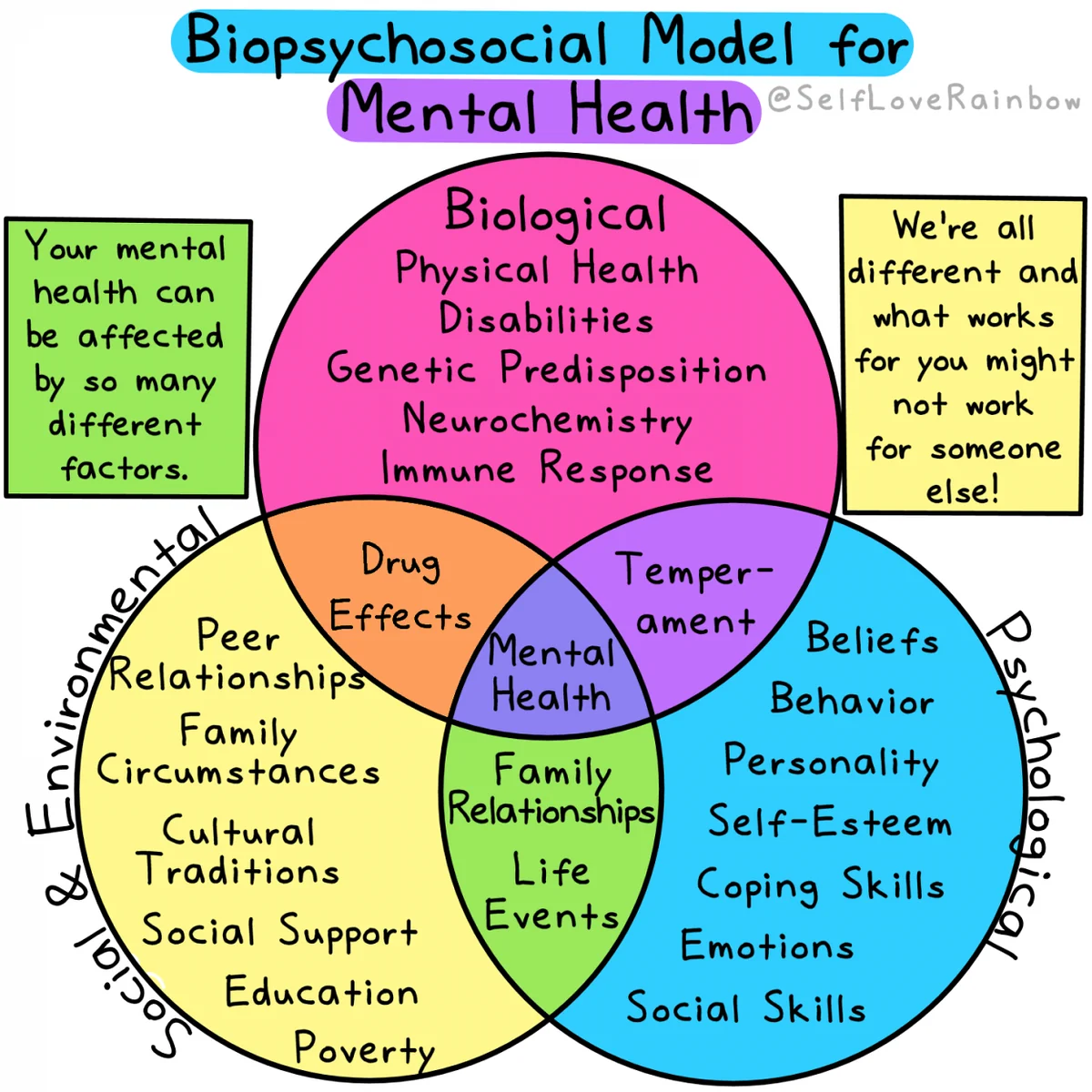
- The biopsychosocial model
- The stress-vulnerability model
- The 5Ps formulation model
Use information from the service user’s assessment to summarise the factors that led to their current episode of involvement with mental health services.
The discussion should:
- Identify relevant biological factors.
- Identify relevant psychological factors.
- Identify relevant social factors.
- Explain the causes or influences associated with the current episode.
- Demonstrate how the identified factors interact with one another.
- Distinguish between contributing factors, current triggers, maintaining factors and protective factors where appropriate.
- Link the formulation directly to the service user rather than discussing the model only in general terms.
The report should demonstrate how assessment findings explain the causes and development of the service user’s current mental health difficulties.
Criterion 2: Biological, Psychological and Social Interventions
Apply and explain the biological, psychological and social interventions being used or considered for the service user.
The interventions discussed must respond directly to the needs identified in the formulation.
Biological interventions
Discuss relevant interventions relating to:
- Physical health assessment and monitoring
- Mental health medication
- Medication effectiveness and adverse effects
- Symptom management
- Sleep, nutrition, activity or substance use where relevant
- Physical health conditions that may affect mental well-being
Psychological interventions
Discuss suitable psychological or psychosocial approaches, such as:
- Cognitive behavioural therapy
- Psychoeducation
- Coping-skills development
- Relapse-prevention work
- Motivational approaches
- Other relevant psychosocial interventions
Explain why the intervention is appropriate for the service user’s assessed needs.
Social interventions
Discuss interventions connected to the service user’s present social circumstances, including where relevant:
- Housing
- Relationships
- Family support
- Social isolation
- Financial difficulties
- Employment
- Education
- Occupational needs
- Vocational support
- Community participation
Risk management
Include a clear discussion of risk assessment and risk management. Explain how identified risks are monitored, communicated and managed through the care plan.
Person-centred care planning
Explain how the service user’s wishes, preferences, goals, strengths and individual needs were incorporated into care planning.
Service-user and carer involvement
Make clear reference to the involvement of the service user and, where appropriate and with consent, their carers or family members.
Multi-professional collaboration
Explain how care was coordinated with the multidisciplinary team. Identify the relevant professionals and clarify how their contributions supported the service user’s physical, psychological and social needs.
Criterion 2 requires the integration of biological, psychological and social interventions with risk management, person-centred care, carer participation and multidisciplinary working.
Criterion 3: Evaluation of Care
Provide an analytical account of how the quality and effectiveness of the service user’s care were assured and evaluated.
Revisit the goals identified in the assessment and care plan. Present evidence showing whether each goal was:
- Achieved
- Partly achieved
- Not achieved
- Still in progress
The evaluation should draw on evidence from:
- The service user
- Carers or family members where appropriate
- Nurses
- Members of the multidisciplinary team
- Relevant assessment or outcome measures
- Clinical observations
- Reviews of the care plan
- Changes in symptoms, functioning, risk or quality of life
Explain how multi-professional and multi-agency involvement contributed to the evaluation process.
Refer to a recognised evaluation or care-planning framework where relevant. Examples may include the Care Programme Approach or an appropriate clinical care pathway.
Do not merely state that an intervention worked. Explain how its effectiveness was measured, what evidence supports the judgement and whether the care plan required modification.
Criterion 4: Legal and Ethical Issues and Unmet Needs
Analyse the legal and ethical issues involved in the service user’s care.
Relevant legal considerations may include:
- Mental Health Act 1983, as amended in 2007
- Mental Capacity Act 2005
- Safeguarding
- Deprivation of Liberty
- Guardianship
- Confidentiality and information sharing
Only discuss legislation that is directly relevant to the selected service user.
Relevant ethical issues may include:
- Consent
- Capacity
- Autonomy
- Choice
- Collaboration
- Best interests
- Confidentiality
- Dignity
- Least restrictive practice
- Carer involvement
- Balancing individual rights with safety
Explain how the relevant legal and ethical issues were managed by the service and through organisational processes.
Identify any unmet physical, psychological or social needs. Explain:
- Why the need remains unmet
- How it affects the service user
- Whether organisational or service barriers contributed
- What actions are planned to address it
- Which professionals or agencies should be involved
This section must analyse the issues rather than simply name legislation or ethical principles.
Conclusion
Provide a brief summary of the report’s main points.
The conclusion should bring together:
- The main findings from the formulation
- The key interventions provided
- The evaluation of the service user’s care
- The principal legal, ethical or unmet-need considerations
Do not introduce new evidence, theories, interventions or arguments in the conclusion.
Academic Writing Requirements
The service user must remain central throughout the report. Theories, models and frameworks should be applied directly to the service user’s assessment and care.
Use professional and academic sources throughout the assignment. Suitable sources include:
- Recommended module textbooks
- Peer-reviewed journal articles
- Professional standards
- Clinical guidelines
- Government publications
- Legislation
- Policies from credible healthcare organisations
Only introduce a theory or concept when it will be explained and applied meaningfully.
Select information that is relevant to the service user and the assessment criteria. Including large amounts of unrelated information will not improve the quality of the report.
Use clear signposting or subheadings to show which assignment criterion is being addressed.
Proofread the report carefully for spelling, punctuation, grammar, sentence structure and clarity.
What to Avoid
Do not:
- Provide a lengthy descriptive history of the service user.
- Copy information directly from the clinical assessment.
- Write a general essay about mental health theories.
- Use tables, lists or diagrams within the main report.
- Rely on vague statements or unsupported claims.
- Use anecdotal language or slang.
- Use Wikipedia, blogs, public-information pages or self-help websites as academic references.
- Include identifiable information about the service user, carers, staff or placement organisation.
Understanding should be demonstrated through connected, discursive academic writing rather than tables and lists in the submitted report.
Presentation Requirements
The final report must:
- Be approximately 2,000 words.
- Include a cover page.
- Use double-line spacing.
- Use complete sentences and properly structured paragraphs.
- Include page numbers.
- Include in-text citations throughout.
- Include a reference list beginning on a new page.
- Follow the referencing style required by the module.
- Maintain confidentiality throughout.
The presentation instructions require double spacing, page numbers and a reference list beginning on a separate page