How to use this resource: A collection of past assessment tests, provided for personal practice. For personalised support, Get Matched →
Nursing Leadership and Service Improvement Project Guidance
Nursing Leadership
Leadership and management learning and development of the students undertaking the MSc Nursing Pathway
Module Aims: This module is the culmination of the leadership and management learning and development of the students undertaking the MSc Nursing Pathway. As well as enhancing the students’ knowledge of leadership and management theory, the module requires them to demonstrate that they can apply the principles learned and synthesise appropriate management or leadership strategies in a practice situation leading to a service improvement. Content and outcomes are linked to National and local Standards and political drivers for management and leadership.
Learning outcomes
By the end of the module, students will be able to:
- Identify and critically judge the need for a strategic service specific innovation and rationalise the contribution to quality enhancement.
- Appraise a range of innovation strategies and models to be used as a framework for decision making.
- Appraise a range of leadership theories and styles in order to manage group dynamics and collaborative working.
- Develop an evidence- based business case for a proposed service improvement.
- Develop an artefact for a proposed strategic service improvement and pitch this in order to critically evaluate the effectiveness of the innovation.
Assessment:
This module is assessed by a five- stage written and oral assessment that constitutes a project. The project focuses on an issue selected by you where improvement of practice is required. This service improvement can be something new or something already established in practice that requires some redesign. After selecting the service improvement, you will develop an evidence-based case for this change in the form of a literature review. Having reviewed the literature pertaining to this matter, the student will indicate evidence-based strategies for improving throughput and identify a change management strategy to achieve this which will lead to the development of an artefact which is then pitched to peers and service users. The student will develop a business case for the development of the artefact that will justify their strategy, risk assess the artefact and outline the financial costs for developing and implementing the artefact.
Essential reading
Blundel, R, Lockett,& N, Wang, C. (2018) Exploring entrepreneurship. London: United Kingdom. Sage Publications.
Harvey, M., & Land, L (2016) Research Methods for nurses and midwives. London: United Kingdom. Sage Publications.
Hiat, J,M, & Creasy, T. (2016) Change management: The people side of change. Colorado. United States of America. Prosci.
Marquis, B,& Houston, C.J. (2015) Leadership roles and management functions in nursing. London: United Kingdom. Wolters Kluwer Health.
NorthHouse, P, G. (2019) Introduction to leadership. Fourth Edition. Michigan: United States of America.Sage Publications.
Taylor, R., &Webster- Henderson, B. (2016) The essentials of Nursing Leadership. Michigan: United States of America. Sage
Western, S. (2019) Leadership, a critical text. 3rd Edition. London: United Kingdom. Sage Publications.
Journals
Health Service Journal
Journal of Nursing Management
Nursing Management
Essential Websites:
http://www.improvementnetwork.gov.uk/
http://www.improvement.nhs.uk/
http://www.institute.nhs.uk/option,com_quality_and_service_improvement_tools/Itemid,5015.html
Time line for completing the stages Final submission date is 13/04/26 by 1pm
|
Stage 1: |
Introduction (400 words), Develop a tool/artefact for service improvement |
|
|
Part 2: |
Literature review (3000 words)
|
|
|
Part 3 |
Develop a business case outlining costs, risks, benefits (1500 words). |
|
|
Part 4:
|
Critical discussion of change theory, leadership skills that would be used to implement the tool/service improvement artefact. (2000 words) |
|
|
Part 5:
|
· A presentation/pitch to a small group of peers and service users. THIS IS NOT MARKED. You will receive feedback from those watching (1000) words for power point- this is submitted as part of the project) When not pitching you will be peer reviewing. |
Total words =7,900 and add up to 500 to conclude |
All sections are submitted as one complete assignment
Writing the project
v Choosing the service improvement.
First, don’t panic!
Some of you will already have thought of an issue that needs improving and others not. It is okay to not instantly think of something or have lots of issues and do not know which to choose. In the module there are small group tutorials which will help things become clearer.
When you have settled on an issue, think what you want to devise that will solve the issue. We have called this the artefact or tool. This is what you will pitch to peers and service users at the end of this project.
v How do I get started?
You are going to be spending a long time with your service improvement so choose something that interests you.
v
|
This Photo by Unknown Author is licensed under CC BY-SA |
What have I written about before that really interested me?
v What have I seen in practice that I would like to improve?
v What will help me stand out when applying for posts?
v What ‘specialist’ knowledge will enhance care?
v WHAT FUTURE CAREER INTERESTS HAVE YOU GOT?
You may wish to explore a topic/project that will be useful to leadership in the future. Career progression can often be a competitive business and your project may be attractive to your current or future employers if the material can be utilised or built on. Being able to list your dissertation topic/project on your curriculum vitae may help you to stand out from other applicants. A ‘specialist’ knowledge can be very useful in practice.
Some examples of service improvements:
v Introducing a colour code to fluid charts to immediately recognise dehydration
v Introducing a patient information leaflet on a topic
v Introducing an App
Deciding on a Specific Topic
Part of being a good ‘academic’ consists not in knowing all the answers so much as being able to ask good questions and being able to identify evidence- based practice and innovation. Hence part of the criteria for becoming a master’s degree student consists of the application of critical analysis and critical thinking. This is not easy to do at first, although it does come with practice and with an enquiring mind. Your module leader will help you in the process of topic/project selection and literature review, but he/she will not do it for you; it is your responsibility, not hers/his.
Getting Started
Once you have chosen a topic area/decided on a project.
Some suggestions:
v Write down everything you know about the topic on which you want to conduct your literature review/area of your project. It may not be much but it will help you to focus. Try to recall why you thought of it in the first place and what made you think it was interesting and worth doing. Link the topic or issue to current policy in order to set the scene and rationalise your topic in your own mind. How does the topic area impact upon service users, health staff or the organization?
v What questions does the topic/project raise in your mind? List as many as you can, even those which seem silly or irrelevant at the moment.
v Undertake an initial, brief search the literature to ensure that your topic/project has sufficient research underpinnings to make further effort worthwhile.
v If you are doing the project you will need to search literature related to leadership, project management and implementation of change.
v Go away and read more about your chosen topic. This process is time consuming and can be frustrating. Ask yourself “Do I find this interesting?” “ Is there enough ‘meat’ in this to make a good project/dissertation topic?”. Either way time is of the essence; give yourself lots of it if you can, in order to come to a decision about what you will do and begin to write.
v How much research has been carried out on this topic?
Seeking Advice
One good reason for seeking a supervisor’s advice in this process, is that he/she may be able to tell you if a topic is too broad or too generalist or if there is too much to do within the scope of this literature review/project. Hence, consulting with tutors in good time is vital. She/he may ask some searching questions to ensure that you understand your topic and that you are coping with the work involved. Occasionally changes to your topic may be suggested, this is to help you progress your project.
Originality
Ideally your work should demonstrate a degree of originality. This does not mean that you have to be doing something that no one else has done before! That would be very difficult at this level. Your expertise in critiquing the literature and your interpretation and application to practice will show individuality and originality. Originality can also be demonstrated in how you plan and execute your project.
In the early stages of project preparation, when you are just teasing out ideas, it is worth consulting other professionals who may be able to help you because they may have expertise in the area you wish to investigate. You may choose any topic you wish as long as it is considered suitable for a leadership and management project and is relevant to your area of practice.
Please note that the tutor concerned will NOT provide the exact design and method for you to follow or search the literature for you but will give you advice, information and prompts to develop a strategy in developing your own critical analysis.
3. Planning
The Preliminary Plan- producing a gant chart as a timeline
This might sound obvious but since it is not always done, it is worth stressing that immediately you have decided upon a topic, you should draw up a PLAN of what the final work will include and look like ie a Gant chart with time lines. You may change the plan from time to time but you should start with one. If you have a detailed plan it will help you to confirm viable subject matter and the kind of sub-headings or themes that you want to work with in order to reach an overall conclusion.
Draw up a plan of your structure at the start – when you are choosing and deciding what to do and how to go about it. Refer to the plan regularly to monitor your progress, even if you subsequently modify it.
Writing the Final Document
Format and Presentation
Title page: You must use the new front page on the moodle page.
Design Your project should be in a word format and submitted via Turnitin by
1pm on the day that it is due.
Margins: All your margins (left, top, right, bottom) must be set to 2.5cm. Except for the page number at the bottom of the page, avoid using headers or footers.
Vertical & horizontal spacing: The font used throughout should be Times New Roman, size 12. Or Ariel size 11. Leave one space after commas and semicolons; one space after internal full stops in first and middle initials in reference list (e.g. Smith, M. J.); and two spaces after full stops at the end of a sentence. The main text must be double spaced except for long quotations which must be indented and single spaced.
Page numbering: The title page should not be numbered. Lower case Roman Numerals (i, ii etc.) should begin at the Contents page. Starting with the first page of chapter one, the main body of the dissertation should use ‘normal’ (Arabic) numbers, beginning at 1 and continuing consecutively. Numbers should appear in the centre bottom of each page.
Tables & Figures: Each table and/or graph should be numbered consecutively and
consistently (Table 1, Table 2 etc. or Figure 1, Figure 2 etc.) and each should have a title that reflects the content accurately. Labels are placed above tables and below figures
Good writing seldom comes effortlessly – thinking about it, learning from the writing of others and above all, writing more and revising what you write will all help you to improve. The purpose of writing the project is to communicate to others about the topic you have chosen, to enable others to understand the topic. The project should be written with an audience in mind. The ‘audience’ for your project may be other health professionals interested in your topic thus they require a high level of critical analysis and accurate, practical conclusions.
Use a computer from the start backing work up on the hard drive each time you add to it.
Ensure that your Project meets the following Criteria:
v Is 8,000 words in length plus or minus 10% (marks will be deducted as per University policy if the word limit exceeds 8,800 words). Submitting work of less than 8,000 words will jeopardise the marks that can be awarded. This word limit does not include the list of references at the end of the work or any appendices that may be attached.
v It contains a clear statement of the topic to be reviewed/project being carried out and questions to be answered. It also needs to describe the relevance of your topic/project (rationale) for your area of practice.
v It clearly and critically discusses the methods used for literature searching, including data sources, techniques, validity of methods employed and difficulties encountered. If you are doing a project you should also outline your model for executing it.
v It shows how you have critically analysed the literature and drawn out themes or important points.
v It contains a business case to support your project.
v It critically discusses the information collected (or the project management), relates it to practice and attempts to draw valid conclusions.
v It is written in simple, clear language. If your meaning is not clear it can detract from your depth of analysis and be misinterpreted.
v Check your spelling! Check the final typescript for errors. Do not rely on ‘spell check’ - it is not sufficient. No matter how meticulous you are, you will become so familiar with the material that you may overlook errors. It may be useful to ask a friend or family member to ‘proof read’ for you.
v Visual materials (diagrams, charts, graphs, photographs etc.) must be clearly labelled, referred to and made relevant in your text. They should not become merely ‘window dressing’.
v The project should be written in the past tense. The use of first person should be avoided.
v The work should not plagiarise other work. Please read the University statement on Academic integrity which you may access through Moodle. Registered practitioners should note that academic misconduct such as plagiarism may result in their being brought before the Suitability to Practice Panel of the University and, if deliberate misconduct proven, reported to the NMC.
v It is essential that you ensure that patients, clients, professionals and organisations cannot be recognised within your assignment. Breaches of confidentiality or indications of unsafe practice will result in an automatic ‘fail’.
Projects should demonstrate a systematic approach to the analysis of a practice –related issue. Detailed information about how the pertinent literature was obtained should be included. Literature should be mainly research based rather than opinion based. In addition, critical appraisal of research studies should incorporate both methodological and theoretical critiques.
Checklist for Writing Up – Project
The major sections of your project and the order in which they should appear are:
v Front page as per induction
v TITLE
v CONTENTS (including List of Tables and Figures)
v CHAPTER ONE: INTRODUCTION. THE NATURE AND SCOPE OF THE LEADERSHIP AND MANAGEMENT PROJECT and (400 WORDS) ARTEFACT
v CHAPTER TWO: LITERATURE REVIEW. FINDINGS OF THE LITERATURE AND DISCUSSION AND ISSUES FOR CHANGE. (3000 WORDS)
v CHAPTER THREE: BUSINESS CASE 1.500 WORDS
v CHAPTER FOUR: CRITICAL DISCUSSION OF LEADERSHIP AND CHANGE THEORY TO SUPPORT YOUR APPROACH (2000 WORDS)
v CONCLUSIONS AND RECOMMENDATIONS (500 WORDS)
v Pitch equivalent of 1,000 words (5 slides plus references)
v REFERENCES
v APPENDICES (if any) POWER POINT SLIDES FOR PITCH ON ONE OR TWO PAGES
Contents of Sections/stages
Contents
The contents section is simply to tell the reader what to expect in each section/stage.
Stage 1: Introduction and development of artefact
Introduction (The Nature and Scope of the Project) (400words) (Learning outcome 1)
Informing people about your topic involves providing them with background information. You need to tell your audience how your topic fits with the overall professional context, the quality agenda and why it is relevant and important. The introduction should lead the reader towards the specific issue with which your project is concerned. Therefore, throughout the introduction, you should move from the general to the increasingly specific. The purpose is to provide the necessary information to ensure that the reader understands why the topic is relevant. You may wish to reference current practice and the evidence on which it is based, policy or statistics to support the need for you to investigate the topic.
You will design an artefact that could be used to improve clinical practice. The artefact could be a toolkit, an app, an educational tool, a booklet etc. You will then pitch this artefact to a small group of service users and peers. This is an opportunity to sell and justify your service improvement idea. The introduction should also include a justification for the topic choice, limitations, delimitations and definition of terms. You should briefly outline the chapters.
Stage 2: Literature review (3000) ( Learning outcomes 1 and 4)
You need to identify how you conducted your search of the literature, your inclusion and exclusion criteria, search words and databases interrogated. You need to identify, also, how you dealt with the literature you identified, how you categorised it and drew out themes/pertinent topics. You need to explore the literature around your topic area to justify the relevance of your change project.
Stage 3 Business case (1,500) (Learning outcome 4)
In this section you will construct a business case that justifies your artefact, outlines the risks and benefits and explores the financial implications.
Stage 4 : Critical discussion of Leadership, management and change strategies and theories (2000) (Learning outcomes 2 and 3)
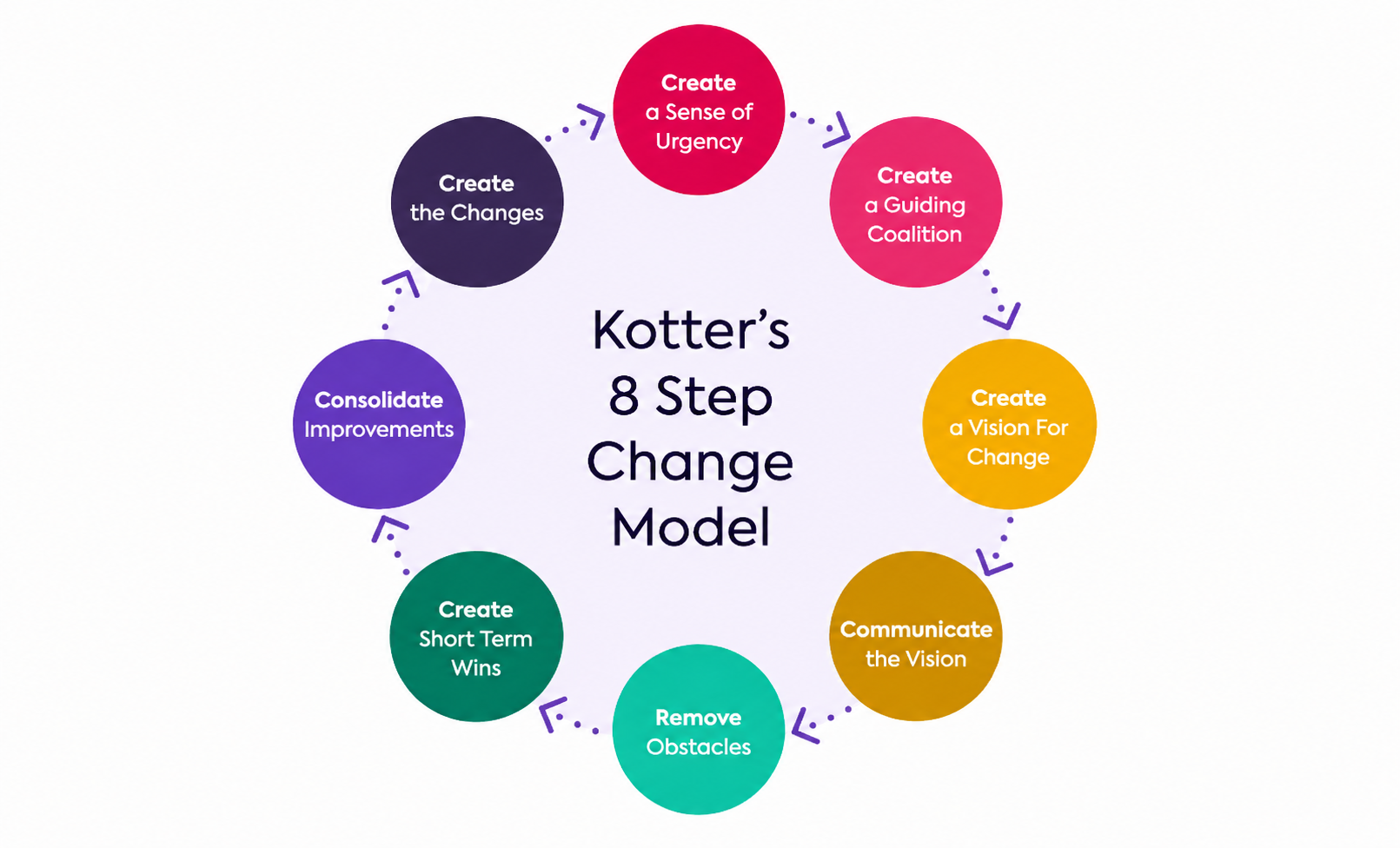
You will have conducted an extensive literature search around change models. You need to expand on the themes/topics you have identified – empirical literature that relates to leadership and management should be critiqued. You should include a critical debate regarding the nature of leadership and management. You need to select a model of change and use this to forma structure to critically discuss the process of change.
Stage 5- Pitch the improvement tool/artefact to peers and service users (1000 words equivelant).
You will prepare a power point presentation lasting no more than 10 minutes on your chosen improvement tool/artefact and pitch it in order to justify it by referring to literature and your business case. You will pitch to small groups of peers and service users. You will receive written feedback from group members.
Conclusions and Recommendations for Practice (500 words)
The main findings of the project should be drawn together and their implications should be discussed. Recommendations should be made for future leadership practice, research and education where appropriate.
APA version 7 Referencing
These are easy marks to gain or lose!
Markers will be looking for your project to be a coherent whole – your discussion is developed logically and your ‘arguments’ clear.
v Referencing is very important. One of the marks of good scholarship in a piece of written work is that the writer pays full attention to the findings and opinions of other scholars who have written about the same subject matter. Mention of other peoples’ work should always be properly acknowledged and referenced. Failure to do so may be considered misleading or dishonest. Deliberately passing off another person’s work as your own is considered plagiarism, and will result in strict penalties. Please read the University statement on plagiarism which you may access through Moodle. Registered practitioners should note that academic misconduct such as plagiarism may result in their being brought before the Suitability to Practice Panel of the University and, if deliberate misconduct proven, reported to the NMC.
Another reason for referencing is so that the reader will be able to see where your ideas and statements have come from, and can check the original sources for themselves to see if they agree with your interpretation. Hence there is a need to distinguish primary from secondary sources, eg: what Bloggs said, or what Brown said Bloggs said.
Unless a particular reference is unobtainable within a reasonable timescale (for example it is not translated into English/Welsh) you will be expected to gain access to primary references. If you do use a secondary reference this must be clearly indicated in the way you cite it. It is also worth mentioning at this point that references are expected to come from recognised sources with a high degree of academic/professional standing. Tabloid, magazine articles and Wikipedia are not considered to demonstrate the required evidence/research base and should only be used if particularly significant or relevant and backed with evidence from referenced journals.
Some of the Things Markers Look For:
The following represent some of the criteria used by markers in assessing aproject. Please note that this is not an exhaustive list.
General Presentation
v Is the Project of the required length?
v Is presentation good?
v Is spelling/punctuation/grammar good?
v Is writing fluent?
v Are sections sequenced appropriately?
v Is communication clear?
v Is the set format (if given) adhered to?
v Is the APA reference system adhered to accurately?
v Is the work critical and supported by research studies?
Introduction
v Are main and subsidiary topics/evidence base, policy for the project clearly established?
v Is the reader sufficiently acquainted with the topic/project?
v Is there justification for limiting the scope of the topic/project?
v Is there a well-defined rationale?
v Are assumptions, limitations and delimitations clearly stated?
Literature Review
v Are selected sources appropriate?
v Has the author critically defined leadership and management?
v Are sources critically reviewed?
v Are sources contemporary?
v Is there appropriate depth to the analysis?
v Have sources been interpreted well and accurately?
v Has application to practice been considered?
v Is application to practice realistic?
v Is the work logically sequenced?
v Do the chapters/sections link to the topic as a whole?
Is the artefact logical and relevant to current practice, is it underpinned by literature, will it be useful for service users or clinical staff, is it financially viable?
Discussion/Conclusion
v Is there an awareness of critical thinking, professional judgement & reasoning and critical analysis?
v Is the discussion appropriately focused and comprehensive?
v Is there evidence of high interpretative skills?
v Are conclusions and findings referred back to research and literature, identified in the introduction and main body?
v Is the significance and application of the literature review articulated clearly?
v Are implications for practice and future directions given?
Need help planning or writing your project?