How to use this resource: A collection of past assessment tests, provided for personal practice. For personalised support, Get Matched →
Fundamentals of Patient Safety and Quality Improvement in Adult Nursing – Assignment Brief
Assignment Title
A critical exploration of the complexities of maintaining patient safety and the contributing factors influencing patient safety and quality care
Assignment Details
Word Count: 3000 words (+/- 10%)
Weighting: 70% of the overall module grade
Your work will be assessed using the module learning outcomes. A pass must be achieved in all three outcomes.
Learning Outcomes
LO1: Critically appraise the principles of risk management in maintaining a safe care environment
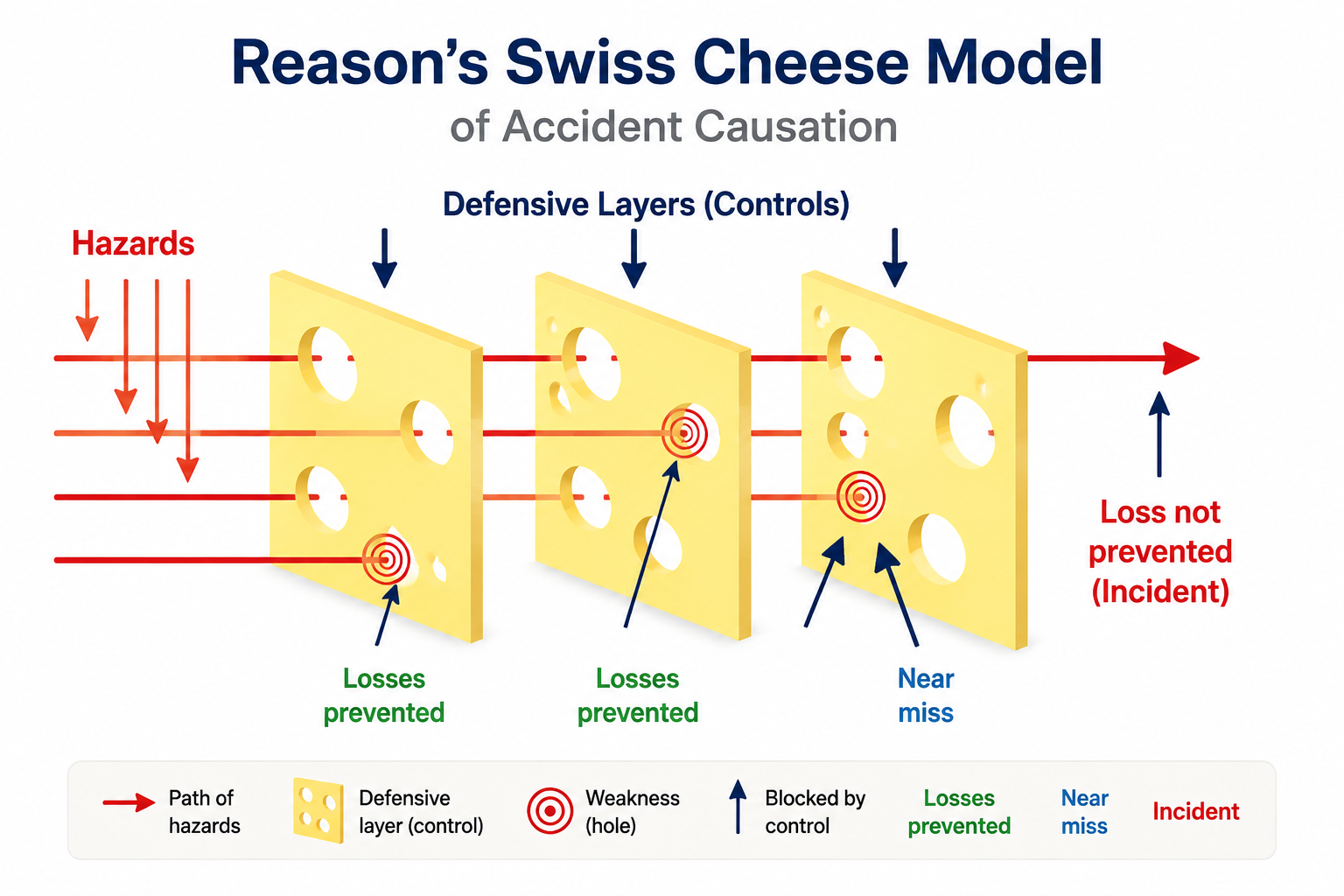
LO2: Critically reflect on near misses, critical incidents, major incidents and serious adverse events
LO3: Critically evaluate how human factors can influence and impact upon behaviour within teams and the way in which this can affect health and safety
A pass must be achieved in all three learning outcomes.
Understanding Critical Exploration
Addressing these learning outcomes requires engagement with academic debate.
Critical exploration involves reading and thinking widely about an issue to develop a deep understanding and establish a clear viewpoint.
Critical exploration can be demonstrated through:
Critical Appraisal
The process of carefully and systematically examining evidence to judge its trustworthiness, value, and relevance within a specific context.
Critical Evaluation
Showing how judgements may vary from different perspectives and developing an objective, reasoned argument based on evaluation of available evidence.
Critical Justification/Defence
Providing reasons for a position or argument through careful examination of evidence to judge its trustworthiness and value.
Assignment Presentation
Students are expected to follow the university guidance for formatting assignments:
Clinical Scenario (Vignette)
Michael is a 65-year-old Black British man with a diagnosis of schizoaffective disorder and Type 2 diabetes. He has been a resident in a specialist mental health rehabilitation unit for the past 18 months.
The unit is part of a larger NHS Trust and provides care for individuals with complex mental health needs.
Over the past two weeks, the unit has experienced significant staffing shortages due to long-term sickness and unfilled vacancies. The team is relying heavily on agency staff, many of whom are unfamiliar with the patients and the unit’s protocols.
On a busy Friday evening, Michael reports feeling dizzy and confused. A newly arrived agency nurse, unfamiliar with his care plan and medical history, attributes the symptoms to his mental health condition and delays checking his blood glucose levels.
Later that night, Michael collapses due to hypoglycaemia. The emergency response is delayed as the nurse struggles to access the electronic health record system.
Michael is transferred to A&E and stabilised, but the incident is classified as a serious adverse event.
The unit has one registered mental health nurse on duty, supported by three HCAs and one student nurse. The recommended nurse-to-patient ratio is not met.
Staff morale is low, and communication between permanent and agency staff is strained. The incident prompts an internal investigation and a review of staffing, training, and digital system access protocols.
Assignment Overview
You are required to critically explore the patient safety challenges arising from a shortage of staff.
You will need to demonstrate an understanding of:
- Patient safety and risk management
- How human factors contribute to maintaining and improving patient safety
- Methods for creating conditions that develop and nurture a culture of safety
You are required to underpin your work throughout by referring to appropriate literature.
Introduction (Indicative 250–300 Words)
The introduction should provide a summary that allows the reader to quickly understand the assignment.
You should:
- Set the topic in context by providing clear insight into the issues to be addressed
- State the specific areas to be examined and the main points to be discussed
- Summarise your findings
Further detail should be developed within the main body of the assignment.
Discussion (Indicative 2400–2500 Words)
You will need to address all three learning outcomes within the discussion.
When exploring context, focus on what matters most. Context provides the criteria against which safety will be assessed.
Consider:
- Where did the incident occur?
- Was it a primary, secondary, or care environment?
- What type of clinical area was involved?
- Why is this significant?
- Was the timing of the incident relevant?
LO1 (750–800 Words)
To address this outcome, explore the meaning of patient safety and the relationship between patient safety, risk management, quality care, and quality improvement.
Explore:
- The concept of safe, quality care
- Safety management and risk management
- Traditional approaches to patient safety (Safety-I)
- Emerging concepts of resilient healthcare (Safety-II)
Critically appraise the principles of risk and safety management in maintaining a safe care environment.
LO2 (750–800 Words)
To address this outcome, explore the concepts of:
- Near miss
- Critical incident
- Major incident
- Serious adverse event
- Patient safety incident
Using the scenario, explain and critically reflect on how the incident reflects the concept of a near miss, serious adverse event, or patient safety incident.
LO3 (750–800 Words)
To address this outcome, explore the impact of staff shortages using a human factors approach to maintaining patient safety.
Consider:
- Organisational factors
- Individual factors
- Job, work, and environmental factors
Critically evaluate the interaction between individuals, workforce, environment, and organisation in relation to staff shortages and patient safety.
Individual Factors
Explore the relationship between human factors and individuals and how these influence:
- Tasks
- Colleagues
- Organisations
Environmental Factors
Consider the relationship between the individual/workforce and the job environment.
Organisational Factors
Consider how organisational systems influence individuals performing their roles.
Areas to consider include:
- Professional accountability
- Poor morale
- Stress
- Fatigue
- Burnout
- Civility
- Workload
- Patient mortality rates
- Skill mix
- Organisational culture
- Teamwork
Choose carefully. You should not attempt to cover all factors listed above.
Focus on exploring the relationship between staff shortages, human factors, and patient safety.
Conclusion (Indicative 250–300 Words)
The conclusion should bring together the key points discussed within the assignment.
You should:
- Summarise and draw together the main points from the discussion
- Identify the significance and implications of your findings
- Link your conclusion to the wider context of nursing
- Reiterate learning gained for future practice
- Present the main message supported by evidence from the assignment
- Refer back to the learning outcomes and finish with a well-reasoned conclusion
Do not introduce new information in the conclusion.
eed Support With Your Nursing Assessment?
Preparing for nursing assignments can be challenging, especially when exploring complex topics such as patient safety, risk management, quality improvement, and human factors in healthcare.
UKNurses provides access to nursing revision resources, course questions, assignment guidance, and academic support materials designed to help nursing students better understand assessment requirements and prepare effectively.
Explore more resources covering:
✓ Adult nursing assignments
✓ Mental health nursing assessments
✓ Patient safety and quality improvement topics
✓ Evidence-based practice resources
✓ Nursing course questions and revision materials