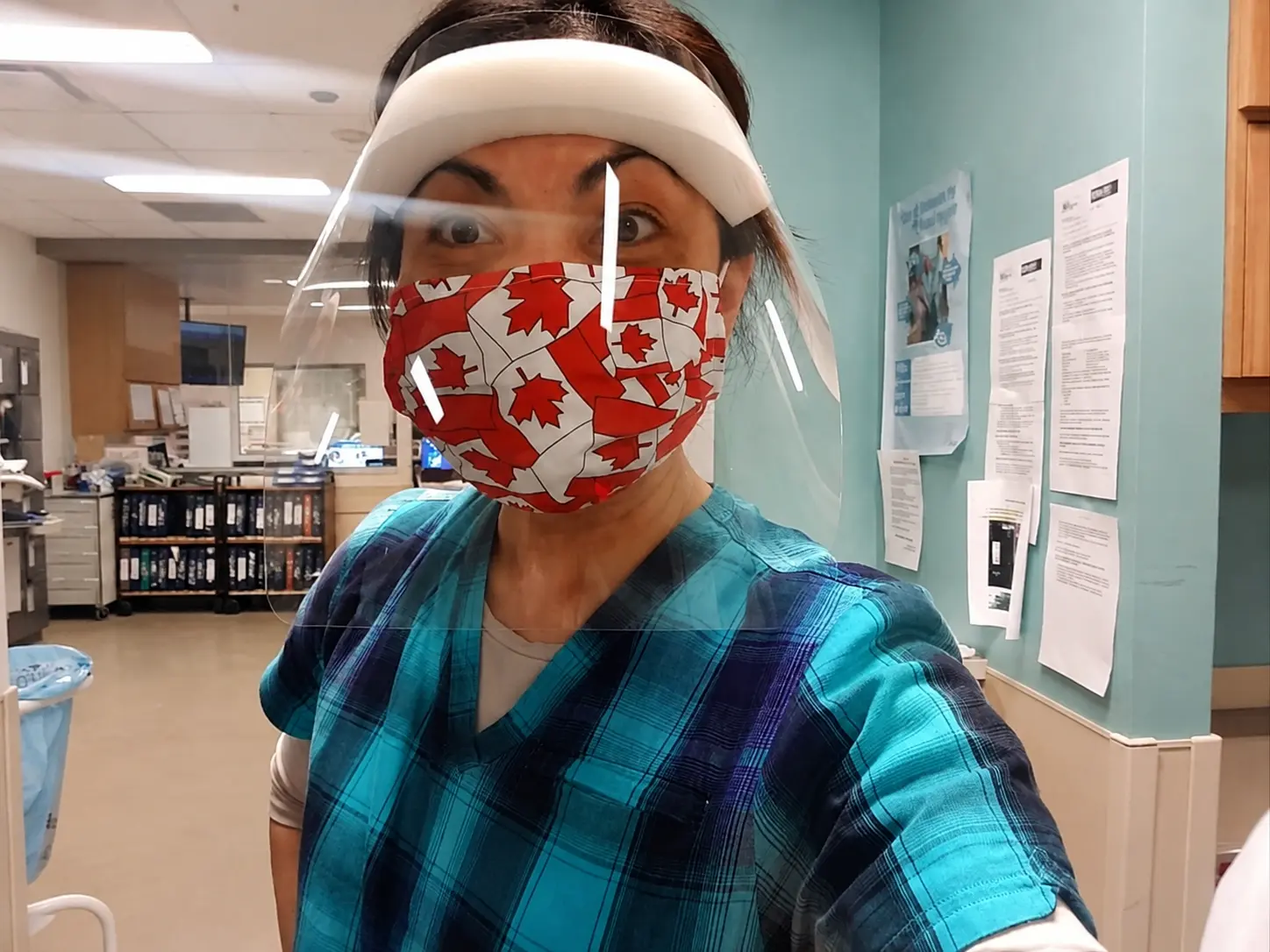
You have probably seen the headlines: Canada needs nurses.
That sounds promising if you are an international student thinking about studying nursing in Canada.
Then you start researching and discover a different problem.
Not every Canadian nursing school accepts international students. Tuition can be expensive. Admission can be competitive. You need to satisfy both the university and immigration requirements. And after spending years studying, you still need to complete the nursing registration process before you can practise as an RN.
So the real question is not simply:
“Can I study nursing in Canada?”
It is:
“Can I choose a Canadian nursing programme that I can afford, get admitted to, complete, register as a nurse and use as part of a realistic career and immigration plan?”
That is what this guide helps you work out.
Key Takeaways
-
-
-
-
-
Canada offers two main pathways: studying nursing in Canada or registering as an internationally educated nurse (IEN).
-
Your starting point determines the right pathway: aspiring nurses generally study in Canada, while qualified nurses can pursue IEN registration.
-
Admission, nursing registration and immigration are separate processes, each with its own requirements.
-
Consider the province, programme eligibility, costs and registration requirements before choosing your route.
-
Nursing can lead to employment and immigration opportunities, but neither guarantees permanent residence.
-
-
-
-
Can International Students Study Nursing in Canada?
Yes. International students can study nursing in Canada, but not every nursing programme accepts international applicants.
This is one of the first traps to avoid.
A university may welcome international students while its nursing faculty has limited places, different admission requirements or no available seats for international applicants.
If your goal is to become a registered nurse, you therefore need to research the specific nursing programme, not just the university.
For most students who want to become registered nurses, the main university pathway is a Bachelor of Science in Nursing (BScN) or Bachelor of Nursing (BN).
The programme usually combines classroom education, laboratory learning and clinical placements. After graduation, you must satisfy the nursing registration requirements in the province where you intend to practise.
The broad pathway looks like this:
Choose a nursing programme → meet admission requirements → obtain study authorization → complete nursing education and clinical training → graduate → complete provincial registration requirements → take the NCLEX-RN where required → obtain registration → seek employment → explore eligible immigration options
That is a much longer process than simply getting a university admission letter.
Step 1: Decide What Type of Nurse You Want to Become
Before comparing tuition fees, decide which nursing role you actually want.
If your goal is to become a registered nurse (RN), look for a recognised Canadian university nursing degree such as a BScN or BN.
If you choose practical nursing instead, you are pursuing a different professional route.
Registered Nurse
RNs have a broader scope of practice and generally require a university nursing degree.
Licensed Practical Nurse
LPN programmes are generally shorter and lead to a different nursing designation, with different registration and scope-of-practice requirements.
Do not choose a programme simply because it costs less or takes less time.
Ask:
-
What nursing designation will I receive?
-
Does the programme lead to RN registration?
-
Which provincial regulator will I apply to after graduation?
-
How long is the programme?
-
Does it include clinical education?
-
Does the school accept international students?
-
What will the complete cost be?
Your first decision should be about the career you want, not the cheapest course you can find.
Step 2: Find Canadian Nursing Schools That Accept International Students
This is where your research needs to become specific.
Do not search only for:
“Canadian universities for international students.”
Search for:
“Canadian BScN programmes accepting international students.”
Then check the nursing faculty's official admission page.
You need to confirm:
-
international student eligibility
-
available intake
-
academic prerequisites
-
English-language requirements
-
application deadline
-
tuition
-
clinical requirements
-
supplementary applications
-
CASPer requirements, if applicable
-
transfer-credit rules
-
study permit considerations
Some nursing programmes are highly competitive.
For example, the University of Calgary introduced a lottery admission process for its BScN programme beginning with Fall 2026 because of demand for nursing education.
That illustrates an important point: being qualified to apply does not mean you will receive a place.
Your shortlist should therefore contain several realistic options rather than one dream university.
Step 3: Check the Academic Requirements
Canadian nursing programmes can have specific high-school or post-secondary prerequisites.
Depending on the university, you may need subjects such as:
-
Biology
-
Chemistry
-
Mathematics
-
English
-
Human anatomy and physiology
-
Psychology
-
Social sciences
The exact requirements vary.
If you completed secondary school outside Canada, the university may assess your qualification to determine whether it meets its admission standard.
You may also need to provide transcripts from previous schools or universities.
If you have already studied at university, ask whether you qualify for transfer credit.
However, do not assume that having previous university credits means you can enter directly into an advanced year of nursing.
Nursing programmes have specific course sequences and clinical requirements. Some previous courses may transfer while others may not.
What if You Do Not Have the Required Subjects?
Do not immediately assume that you cannot study nursing in Canada.
Some universities have upgrading or alternative admission routes, while others have strict prerequisites.
The answer depends on the school.
Before paying an application fee, ask the admissions office:
“Based on my current qualifications, am I academically eligible for this nursing programme as an international applicant?”
That one question can save you considerable time and money.
Step 4: Meet the English-Language Requirements
There is no single English score that applies to every Canadian nursing programme.
Your university admission requirement is separate from the nursing regulator's registration requirement.
A university may accept IELTS Academic, TOEFL iBT, PTE Academic or another approved test.
Some programmes may require a particular overall score and minimum scores in individual components.
The original planning range for many programmes is around:
-
IELTS Academic: 6.5–7.0
-
TOEFL iBT: 80–90+
-
PTE Academic: 60–65+
These are planning ranges, not universal nursing requirements.
Always check the exact programme.
You should also think beyond admission.
If you eventually need to meet a provincial nursing regulator's language requirement, the evidence accepted by that regulator may differ from what your university accepted.
So do not assume:
“I got into university, therefore my English requirements for nursing are finished.”
They may not be.
Step 5: Check Whether CASPer Is Required
Some Canadian nursing programmes use the CASPer test, a situational judgement assessment designed to evaluate qualities relevant to professional programmes.
Not every nursing school requires it.
If your chosen programme does, you need to understand:
-
whether CASPer is required for international applicants
-
which test date applies to your intake
-
how to register
-
whether there are programme-specific requirements
-
when your result must be submitted
Do not prepare for CASPer simply because another Canadian nursing school requires it.
Check your own programme first.
Step 6: Calculate the Real Cost of Studying Nursing in Canada
This is where many international students make an expensive mistake.
They calculate tuition.
They forget everything else.
Your budget needs to include:
|
Cost |
What to consider |
|
Tuition |
Charged by the university and programme |
|
Accommodation |
Rent, residence fees and deposits |
|
Food |
Groceries and meals |
|
Transportation |
Public transport or other travel |
|
Health insurance |
Provincial or university requirements |
|
Books |
Nursing textbooks and learning materials |
|
Uniforms |
Clinical clothing |
|
Equipment |
Nursing shoes, stethoscope and other required items |
|
Application fees |
University and other applications |
|
Study permit |
Government fees |
|
Biometrics |
Where applicable |
|
Nursing registration |
Fees after graduation |
|
NCLEX-RN |
Examination-related costs |
|
Emergency funds |
Unexpected expenses |
International bachelor's tuition can vary considerably between universities.
Planning figures from the original research placed international bachelor's tuition broadly around CAD $15,000–$55,000 per year, with living expenses potentially adding another CAD $15,000–$23,000 or more depending on location and lifestyle.
These are not guaranteed prices.
A programme with lower tuition can still be expensive if accommodation and living costs are high.
The Four-Year Question
Do not ask:
“Can I afford the first year?”
Ask:
“Can I realistically fund the entire programme?”
A four-year nursing degree could represent a very large financial commitment.
IRCC also requires study permit applicants to demonstrate that they have enough money for their studies without relying on employment in Canada to meet the required financial threshold.
For applications made on or after September 1, 2026, a single applicant outside Quebec must demonstrate CAD $23,448 for annual living expenses, excluding tuition and transportation.
That figure is the required living-expense amount for immigration purposes. It is not your total cost of studying nursing.
You still need money for tuition and transportation.
Step 7: Build Your Financial Plan Before Applying
Your financial plan should answer five basic questions:
-
Who is paying my tuition?
-
Who is paying my living expenses?
-
How will I pay for future academic years?
-
What happens if my costs increase?
-
What happens if I cannot find part-time work?
This matters because international students sometimes make the mistake of treating part-time employment as their primary source of funding.
That is risky.
You might find work.
You might not.
And nursing school can leave you with limited time for employment.
A stronger financial plan assumes that you can complete your education even if your part-time income is lower than expected.
Step 8: Apply to the Nursing Programme
Once you have identified programmes for which you are academically eligible, prepare your application.
Depending on the university, you may need:
-
academic transcripts
-
proof of English proficiency
-
identification documents
-
personal statements
-
references
-
supplementary applications
-
CASPer results
-
proof of prerequisite subjects
-
application fees
Pay close attention to deadlines.
Nursing programmes can have different application timelines from other programmes at the same university.
Keep a simple spreadsheet containing:
|
University |
Programme |
Deadline |
English score |
CASPer |
Tuition |
International applicants |
This makes comparison much easier and reduces the chance of missing a requirement.
Step 9: Get Your Study Permit
Once you receive admission, you still need the appropriate Canadian immigration authorization to study.
A university acceptance letter does not automatically give you permission to study in Canada.
Your study permit application can require evidence relating to:
-
your acceptance
-
identity
-
financial support
-
study plans
-
admissibility
-
other documents required by IRCC
Your financial evidence is particularly important.
IRCC expects you to demonstrate that you can support yourself during your studies.
Do not build your application around:
“I will arrive in Canada and work enough hours to pay for everything.”
That is not a reliable financial plan.
Your application should also be consistent.
You should understand why you selected the programme, how it fits your educational background and how you intend to finance your studies.
Step 10: Can You Work While Studying Nursing?
Eligible international students can generally work up to 24 hours per week off campus during regular academic sessions if they meet the applicable requirements.
During qualifying scheduled breaks, eligible students may work unlimited hours.
However, nursing students should be careful about treating those hours as guaranteed income.
Nursing programmes can involve:
-
lectures
-
laboratory sessions
-
clinical placements
-
assignments
-
examinations
-
clinical preparation
-
commuting
Your schedule can become particularly demanding during clinical periods.
Part-time work can help with expenses, but your education should remain the priority.
If your entire budget collapses without 24 hours of weekly employment, your financial plan needs another look.
Step 11: Understand Clinical Training
Nursing is not an online qualification that ends when you pass your final exam.
Clinical education is a major part of nursing training. You will need practical experience in healthcare settings as part of your programme. Depending on the programme, clinical education may expose you to areas such as:
-
medical-surgical nursing
-
community health
-
mental health
-
maternal and newborn care
-
paediatrics
-
long-term care
Clinical placements also come with practical costs and responsibilities.
You may need transportation to placement sites, uniforms, equipment and health or background documentation.
Ask your university how clinical placements are organised before enrolling.
Step 12: Know the 2026 Co-op Work Permit Change
There is an important change for international students in 2026.
As of April 1, 2026, eligible post-secondary international students no longer need a separate co-op work permit for required student work placements such as qualifying co-op placements and internships.
This does not mean every form of practical education automatically falls under the same rules.
Your programme and placement must meet the applicable requirements.
If your nursing programme includes clinical education, ask your university how the current immigration rules apply to your specific placement arrangements.
Do not assume that a general statement about co-op permits answers your nursing programme's situation.
Step 13: Graduate and Apply for Nursing Registration
This is another point where international students sometimes misunderstand the process.
Graduating from nursing school does not automatically make you a practising RN.
After completing your programme, you need to apply to the nursing regulator in the province where you want to practise.
The registration process can involve:
-
proof of education
-
identity documents
-
language evidence
-
jurisprudence requirements
-
criminal record checks
-
examination requirements
-
registration fees
-
other regulatory requirements
The exact process depends on the province.
This is why you should investigate registration before choosing your nursing school, not after graduation.
You want to know that the programme you are considering fits the professional pathway you intend to follow.
Step 14: Understand the NCLEX-RN
The NCLEX-RN is the registration examination used for registered nursing in Canada.
For Canadian nursing graduates, the exam generally comes after completing the applicable nursing education and meeting the regulator's requirements.
Your university prepares you academically, but passing the NCLEX-RN remains your responsibility.
Do not leave preparation until the final weeks before the exam.
The NCLEX-RN tests your ability to apply nursing knowledge and make safe decisions rather than simply recall textbook information.
Your nursing degree and your NCLEX preparation therefore serve different purposes.
Step 15: Apply for a PGWP After Graduation
The Post-Graduation Work Permit (PGWP) can allow eligible international graduates to work in Canada after completing their studies.
However, do not choose a nursing programme simply because someone told you:
“You will get a PGWP after graduation.”
PGWP eligibility depends on the institution, programme, study history and other applicable requirements.
Current rules also include language requirements.
For graduates of bachelor's, master's and doctoral programmes, applicants generally need CLB 7 in English or NCLC 7 in French in all four language abilities, subject to the rules applicable to their application.
There is also an important distinction between bachelor's degrees and other programmes.
Graduates of bachelor's, master's and doctoral programmes do not have to meet the PGWP field-of-study requirement.
Other programmes can be subject to field-of-study rules depending on the applicant's circumstances and the date of the study permit application.
This is another reason a bachelor's nursing programme can be worth considering if becoming an RN is your actual career goal.
Still, verify PGWP eligibility for the exact programme before paying tuition.
Step 16: Look for Nursing Employment After Graduation
Once you have completed your education and obtained the required nursing registration, you can begin looking for nursing employment.
Canada has significant demand for nurses.
The Canadian Nurses Association reported 477,980 regulated nurses eligible to practise in 2023, including registered nurses, nurse practitioners and licensed practical or registered practical nurses.
Statistics Canada also reported approximately 21,000 registered nurse vacancies and 10,000 licensed practical nurse vacancies in the first quarter of 2025.
These figures show substantial demand, but they should not be interpreted as a guarantee that you will immediately find your preferred job.
Employment depends on:
-
province
-
employer
-
registration
-
experience
-
specialty
-
location
-
current vacancies
-
willingness to work shifts
-
rural or urban preferences
If employment is your priority, research employers before you choose where to study.
Can Nursing Help You Get Permanent Residence in Canada?
Potentially.
But nursing is not an automatic permanent residence pathway.
After graduation, an international nursing graduate may potentially explore immigration options such as:
-
Express Entry
-
Canadian Experience Class
-
Provincial Nominee Programmes
-
Atlantic Immigration Program
-
other applicable immigration pathways
Your eligibility depends on your individual circumstances.
Factors can include:
-
age
-
education
-
language ability
-
Canadian work experience
-
previous work experience
-
immigration status
-
province
-
occupation
-
CRS score
-
programme-specific requirements
For the 2026 Express Entry healthcare and social services category, eligible candidates need at least 12 months of qualifying work experience in an eligible occupation within the previous three years, among other requirements.
That does not mean:
Study nursing → graduate → PR.
Immigration selection is a separate process.
The Student-to-Nurse-to-PR Pathway
A possible long-term sequence looks like this:
Study in Canada → graduate → complete nursing registration → obtain eligible work authorization → work as a nurse → meet immigration requirements → apply through an eligible PR pathway
Each arrow represents another set of requirements.
That is why you should not choose a nursing school based solely on the promise of permanent residence.
Your first priority should be obtaining the nursing qualification and registration needed for your career.
Then you can assess which immigration options fit your circumstances at that time.
Which Canadian Province Should You Choose?
There is no single best province for every international nursing student.
Your decision should consider at least four things:
1. Tuition
Compare the full programme cost, not just the advertised annual tuition.
2. Living costs
A lower tuition bill does not necessarily mean a lower total cost.
3. Nursing programme availability
A university cannot help you if its nursing programme does not accept international applicants.
4. Employment and immigration options
Look at the nursing labour market and immigration programmes that could potentially apply to you.
Manitoba and Atlantic Canada may interest students who are flexible about location because of regional immigration programmes and, in some cases, lower education costs.
Ontario, Alberta and British Columbia have large healthcare systems and substantial nursing workforces.
However, “easiest province for PR” is the wrong question.
Ask:
“Which province gives me the strongest overall fit between education, cost, nursing registration, employment and immigration eligibility?”
That answer will differ from one student to another.
How Much Can Nurses Earn in Canada?
Nursing salaries vary by province, employer, experience and specialty.
Broad planning figures from the original research placed registered nurse salaries around:
-
CAD $60,000–$80,000 for some entry-level roles
-
CAD $90,000–$110,000+ for experienced nurses
These are broad estimates rather than salary guarantees.
Actual earnings can be affected by:
-
provincial wage grids
-
union agreements
-
years of experience
-
overtime
-
night shifts
-
weekend premiums
-
specialty
-
employer
-
full-time or part-time status
For a realistic financial plan, check current job postings and wage agreements in the province where you intend to work.
Common Mistakes International Students Should Avoid
1. Choosing the cheapest nursing school
Cheap tuition means little if the programme does not fit your career goal or accept international applicants.
2. Assuming every Canadian university offers international nursing places
It does not.
Check the nursing programme itself.
3. Assuming admission means your study permit is guaranteed
It does not.
University admission and immigration approval are separate.
4. Budgeting around part-time work
You may be allowed to work, but employment is not guaranteed.
5. Assuming graduation makes you an RN
You still need to satisfy provincial registration requirements.
6. Assuming nursing guarantees PR
It does not.
Immigration programmes have separate eligibility and selection requirements.
7. Looking at tuition without looking at living costs
Accommodation, food, transportation and other expenses can substantially change your total budget.
8. Choosing a school without checking PGWP rules
PGWP eligibility depends on specific programme and applicant requirements.
Check before enrolling.
International Student Canada Nursing Checklist
Before you pay an application fee, you should be able to answer these questions:
Education
-
What nursing designation do I want?
-
Do I want to become an RN or LPN?
-
Which Canadian programmes offer that qualification?
-
Does the programme accept international students?
-
Do I meet the academic prerequisites?
-
Do I need CASPer?
English
-
Which English test does the university accept?
-
What score do I need?
-
Are minimum scores required in individual components?
-
Will I later need separate language evidence for nursing registration?
Money
-
What is the complete tuition?
-
What are the living costs?
-
How much will accommodation cost?
-
How will I pay for all years of study?
-
Can I afford the programme without relying on part-time employment?
Immigration
-
Do I meet the study permit requirements?
-
Can I demonstrate the required funds?
-
Is the programme eligible for the immigration/work options I am considering?
-
What are the current PGWP rules?
Nursing registration
-
Which province will I practise in?
-
Which nursing regulator will assess my application?
-
Will I need the NCLEX-RN?
-
What other registration requirements apply?
Career
-
Where are the current nursing vacancies?
-
Which employers recruit new graduates?
-
Am I willing to work outside a major city?
-
What salary can I realistically expect?
Immigration after graduation
-
Which PR pathways could potentially apply?
-
What work experience would I need?
-
What language requirements apply?
-
What could change before I graduate?
Is Studying Nursing in Canada Worth It for International Students?
It can be, but it is a major decision.
Canada offers international students the opportunity to study nursing, gain clinical education and potentially build a nursing career after graduation.
But the route is not:
“Get admitted → become a nurse → get PR.”
It is closer to:
“Choose the right programme → afford the education → obtain study authorization → complete nursing training → meet registration requirements → pass the required examination → become registered → find eligible employment → assess immigration options.”
That difference matters.
If you choose a programme without checking international admission, costs, registration and post-graduation options, you could spend years and a significant amount of money solving a problem you could have avoided at the beginning.
Final Thoughts: Choose the Nursing Pathway Before You Choose the University
If you want to become a nurse in Canada as an international student, do not start by asking:
“Which university is cheapest?”
Start with:
“Which Canadian nursing programme can take me from my current qualifications to the nursing career I want?”
Then check admission requirements, international student eligibility, tuition, living costs, clinical training, study permit requirements, nursing registration, NCLEX-RN, PGWP eligibility and potential immigration options.
The nursing shortage makes Canada an interesting destination.
It does not remove the need for careful planning.
Your best choice is the programme that makes sense academically, financially, professionally and legally not simply the one with the lowest tuition or the most attractive immigration promise.
Remember, choosing a Canadian nursing programme can be confusing when admission, English tests, nursing registration, NCLEX-RN and immigration all have different requirements.
UKNurses supports nursing students and nurses with nursing education guidance, NCLEX-RN preparation, IELTS/OET preparation and career pathway support.
If Canada is your goal, start by understanding the pathway that fits your current qualifications and career plans by geeting ion touch with UKNurses nursing support.
Sources
-
Canada.ca: Express Entry Category-Based Selection — current healthcare and social services category requirements, including qualifying work experience and eligible nursing occupations.
-
Canada.ca: Post-Graduation Work Permit Eligibility — current PGWP language, programme and eligibility requirements.
-
Canada.ca: PGWP Field of Study Requirement — current field-of-study rules.
-
Canada.ca: Study Permit Financial Support — current proof-of-funds requirements.
-
Canada.ca: Work Off Campus as an International Student — current international student work rules.
-
Canada.ca: Working as an International Student — current student work and co-op information.
-
Canadian Nurses Association: Nursing Statistics — regulated nursing workforce data.
-
Statistics Canada: Skill Underutilization Among Immigrant Women With a Nursing Education — nursing vacancy and IEN workforce data.
-
College of Nurses of Ontario: Nursing Registration Exams Report — nursing registration examination data.
-
University of Calgary: BScN Admission — information about its BScN lottery admission process.
Important: University admission, nursing registration and Canadian immigration are separate processes. Meeting one set of requirements does not automatically satisfy the others. Always confirm current requirements directly with your university, provincial nursing regulator and Immigration, Refugees and Citizenship Canada (IRCC) before paying fees or making travel plans.