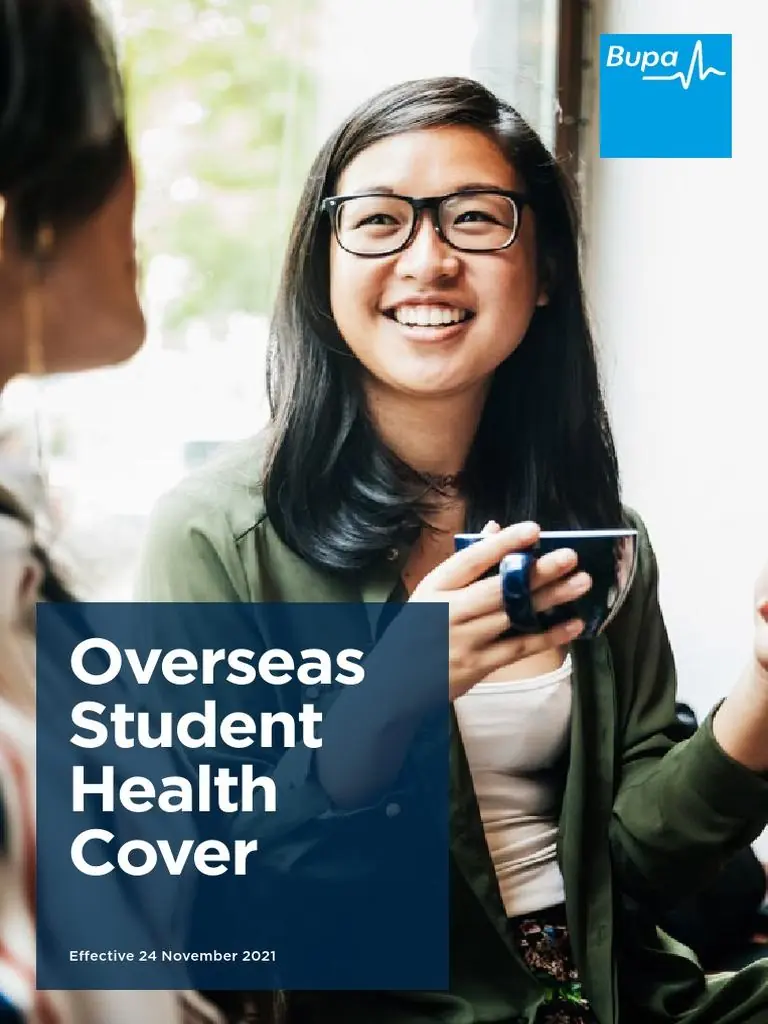
OSHC for International Nursing Students in Australia: Complete Guide to Cover and Clinical Placement Compliance
A guide for overseas nursing students covering OSHC requirements, visa obligations, clinical placement compliance, immunisation, screening checks and essential preparation steps.
Key Takeaways
· OSHC is mandatory for international nursing students in Australia.
· Nursing students must complete health checks and placement requirements early.
· Choosing the right OSHC provider helps manage healthcare costs and support needs.
· Staying organised with documents prevents placement delays and visa issues.
· Early preparation helps you focus on learning and becoming a confident nurse.
This guide brings the key information together in one place. It helps you understand what is required before starting nursing studies and clinical placement in Australia. If you’re still deciding where to study, our guide on ATAR requirements for nursing degrees in Australia is a useful starting point before you get to the OSHC and compliance stage covered here.
It covers two parallel obligations every international nursing student in Australia carries:
• OSHC, the health insurance every student visa holder must maintain.
• Clinical placement compliance, the immunisation, screening, and background-check requirements specific to nursing/health-science degrees.
Not sure where to begin? If you haven’t enrolled yet, our Pre-Nursing Support team can help you map out entry requirements and your application pathway before you commit to a course. Book a free consultation →
OSHC the Legal Basics
OSHC requirements are set and enforced by the Department of Home Affairs (DHA) based on student visa rules. Its minimum benefits are set out in the OSHC Deed, a legal agreement between the Commonwealth and each approved insurer, administered by the Department of Health, Disability and Ageing.
• Only Australian insurers who have signed the OSHC Deed with the government are permitted to sell OSHC. Always purchase OSHC from an approved provider.
• You are responsible for holding valid OSHC for the entire duration of your stay in Australia on the student visa, and you personally are responsible for ensuring there is no gap in cover; you must purchase additional OSHC to cover the gap period.
• Maintaining OSHC is a condition of your visa, and breaching visa conditions, including a lapse in OSHC, risks your visa being cancelled by the Department of Home Affairs. Universities describe this as “breaching visa conditions may lead to cancellation,” not an automatic, instant process, but it is a risk you should avoid.
• A small number of nationalities, including Sweden, Norway, and Belgium, may have alternate arrangements under their own national schemes. Check with DHA if this applies to you.
• Students from the UK, Sweden, the Netherlands, Belgium, Slovenia, Italy and New Zealand can also access Medicare under Reciprocal Health Care Agreements, but this is in addition to OSHC, not a substitute for it.
What OSHC covers (standard/basic policy)
• GP and specialist visits
• Public and private hospital treatment
• Surgery, pathology (blood tests), imaging (X-rays)
• Ambulance and emergency care
• Some prescription medications (annual cap applies)
• Pregnancy-related care (typically after a 12-month waiting period)
• Many providers include counselling/mental health support
Reimbursement level is typically ~100% for GP visits, hospital treatment and emergency care, and ~85% for specialist consultations, blood tests and imaging, check your specific provider’s schedule, as this varies.
What OSHC does not cover (standard policy)
• Dental (routine checks, fillings)
• Optical (eye tests, glasses)
• Physiotherapy, chiropractic, podiatry
• Elective/non-essential surgery
• Pre-existing conditions (waiting period applies)
These are only available if you pay extra for “extras”/additional cover, and even then, dental/optical benefits under OSHC top-ups tend to be modest, so weigh the extra premium against likely use.
Cover types and who needs them
|
Plan |
Who it’s for |
|
Single |
You, no dependents |
|
Couple |
You + spouse/partner |
|
Family |
You + spouse/partner + children |
Dependent partner on your student visa is generally expected to be on a Couple or Family OSHC policy. Two separate Single policies for a visa-holder plus dependent are commonly not accepted as satisfying the requirement, even though it may look cheaper upfront, insurers have been reported to invalidate an individual policy retroactively when it was used to cover a dependent.
Approved OSHC providers (2026)
• ahm OSHC
• Allianz Care Australia (Peoplecare)
• NIB OSHC
Since only these six can legally sell OSHC, price and service comparison should be your main lever when choosing the best OSHC provider for nursing students.
Indicative 2025-26 Annual Costs
You should always get a live quote rather than budgeting off any single pre-published figure.
Two commonly cited ranges (both for 12-month cover):
|
Coverage |
Range A (industry roundup, 12-month) |
Range B (Careers360, 2025) |
|
Single |
AUD 623 - 806 |
AUD 478 - 609 |
|
Couple |
AUD 3,800 - 5,200 |
(not separately reported) |
|
Family |
AUD 5,500 - 7,500 |
AUD 2,685 - 4,200 |
Broader Australian private health insurance premiums across insurers including Bupa, Medibank and NIB rose an average 4.41% from April 2026. This is the steepest increase since 2017, and the largest rise in almost a decade.
How to buy OSHC: a step-by-step guide
1. Research and compare the six approved providers against your profile (single/couple/family), budget, and preferred hospital network.
2. Check university partnerships, many universities have a preferred OSHC provider with a discounted rate; you’re not obligated to use it, but it’s worth comparing.
3. Select and apply through the provider directly or via your university’s enrolment portal.
4. Pay the premium and receive your policy certificate (Confirmation of OSHC), this typically arrives within 24 hours of payment.
5. Attach the OSHC certificate to your student visa application. DHA will not grant the visa without evidence of cover for the full intended duration.
6. Activate your policy once you land in Australia (via the provider’s app/website) so claims can be processed from day one.
Making a Claim
• In an emergency, seek care immediately. Waiting periods do not apply, and you will sort out the insurer paperwork afterwards.
• For non-emergency care, confirm your provider’s network first. Visiting a bulk-billing GP (billed directly to Medicare-equivalent OSHC processes) is cheaper than a hospital visit.
• Keep digital and physical copies of your membership card and all receipts.
• Depending on the policy, you’ll either get cashless treatment (provider bills the clinic directly) or pay upfront and get reimbursed, submit receipts as soon as possible, as processing can take time.
Renewing, Extending, or Ending OSHC
• Your policy must cover your visa length, calculated from your total visa duration, not just your scholarship or course length.
• If your course finishes before your policy expires, you can request a refund for the unused portion.
• If your course is extended (e.g., you fail a subject and need an extra semester), you must extend OSHC to match before your existing policy lapses, a lapse can jeopardise your visa.
• After graduation, if you switch to a different visa, for example a 485 Temporary Graduate visa, OSHC is replaced by Overseas Visitor Health Cover (OVHC), a related but separate product. Check with your provider when you are approaching this transition.
Which OSHC Should I Take?
There is no single “best” OSHC provider, the right choice depends on what you are looking for, whether price, hospital network breadth, claims speed, or support quality. Treat comparison-site “strengths” descriptions with mild caution, as several are written by insurance brokers/resellers who earn commission on sign-ups. However, the underlying price and structural data are independently verifiable.
Comparative Summary
|
Provider |
Price tier |
Reported strengths |
Best fit |
|
CBHS International Health |
Cheapest observed (~AUD 593/yr single) |
Lower headline pricing |
Budget-constrained single students with straightforward, low-complexity needs |
|
ahm OSHC |
Low-mid |
Simple pricing structure, fast online setup, transparent portal |
Students who want minimal paperwork and self-service claims |
|
NIB OSHC |
Low-mid |
Competitive pricing, strong digital app, fast reimbursements |
Digitally-oriented students who’ll manage everything via app |
|
Allianz Care Australia (Peoplecare) |
Mid |
Multilingual support, guided onboarding, mobile claims |
Students newly arrived in Australia who want more hand-holding, especially with English as an additional language |
|
Bupa Australia |
Mid-high |
Large hospital network, 24/7 student support line, long-established claims infrastructure |
Students who prioritise a well-connected private hospital network and an established insurer |
|
Medibank Private |
Mid-high |
Australia’s largest insurer, extensive partner hospital network, strong customer service reputation |
Students wanting the broadest hospital access and a widely recognised brand (also a common university “preferred provider,” e.g. at RMIT) |
Cover for Nursing Students
Because your degree requires more frequent contact with the healthcare system than most students, GP visits for immunisation sign-off, TB screening follow-ups, blood tests for serology, and potential fitness assessments, weigh your comparison toward:
1. Claims turnaround and GP network breadth. You will likely visit a GP multiple times in your first semester alone for the Immunisation Compliance Certificate. A provider with a strong bulk-billing/no-gap GP network (commonly cited for Bupa and Medibank) reduces out-of-pocket friction during this period.
2. Digital claims speed. Ahm and NIB are consistently flagged for fast, simple digital claims, useful if you’re submitting several small reimbursements rather than one large hospital claim.
3. Support quality over price alone. Request quotes from all six providers before deciding, and weigh service reputation, not just sticker price, a $50/year saving isn’t worth a slow claims process during an actual illness or before a placement deadline.
4. University preferred-provider discounts. Check first whether your university has a negotiated rate; this can offset the price gap with cheaper alternatives like CBHS.
Practical Recommendation Logic
• Tightest budget, low expected healthcare use, comfortable navigating things independently → CBHS, ahm, or NIB.
• Want an insurer most placements/hospitals will already recognise, plus strong claims support during a busy clinical-placement semester → Bupa or Medibank.
• New to Australia, want multilingual/guided support while you are still learning the system → Allianz Care.
• Couple/family cover → compare Medibank, Bupa and Allianz Care specifically, as CBHS/ahm/NIB pricing advantages tend to be more pronounced on Single cover and narrow on Family cover; get all six quotes rather than assuming the “cheapest for singles” provider stays cheapest for family cover.
The only universally correct step, regardless of which provider you lean toward, is to get a live quote from all six approved providers before purchasing, since premiums shift year to year.
Nursing Clinical Placement Compliance
Many general OSHC guides don’t explain the additional requirements faced by nursing students. These requirements are set by state health departments, AHPRA/NMBA, and your individual university. Always check your specific university’s placement office for the authoritative checklist. The pattern below is consistent across universities, with state-level variations noted in Section 4.4.
Juggling compliance paperwork on top of coursework? Our tutors offer dedicated Clinical Placement Prep support alongside assignment and care-plan help. See Nursing Degree Support →
Immunisation Compliance
• An Immunisation Compliance Certificate must be completed by an immunisation provider in Australia. This can be a GP or a registered nurse, and can require several appointments depending on your prior vaccination history.
• Evidence of immunity to measles, mumps and rubella (MMR) and to varicella is required. This can be via documented evidence of a full prior vaccination course, two doses at least 4 weeks apart for each, or serology evidence of adequate antibodies. NSW Health guidance accepts a birth date before 1966 as evidence of presumed measles/mumps/rubella immunity, and specifies that serology is not required once a documented two-dose course has been completed.
• Hepatitis B immunity must specifically be confirmed by blood test, taken 4-6 weeks after the final dose of the vaccination course if you’re completing a fresh schedule.
• Tuberculosis (TB) screening: all healthcare students must complete an online TB screening questionnaire, and screening should ideally happen before live vaccines (MMR, Varicella) because you cannot complete TB screening within four weeks of receiving a live vaccine.
• NSW Health guidance specifies that a TB assessment (and, if indicated, a blood or skin test) is only required for students who meet specific risk criteria, such as born in, or having lived/travelled a cumulative 3+ months in, a country with a high incidence of TB, or having had known TB contact, not automatically for every student.
• Annual influenza vaccination. NSW Health and university sources define the placement-relevant flu season as running from 1 June to 30 September each year, so if your placement runs into that window, you need the current season’s vaccine recorded before 1 June, or before your placement starts. A placement that finishes before 1 June may not need it at all. Confirm the exact cut-off your own placement provider applies, as some university-specific policies set an earlier internal deadline (e.g. 1 May has been seen at some providers).
• Start this process as early as possible after enrolment, some universities explicitly warn that immunisation courses can take months to complete.
Background and Screening Checks
• National (Australian) Police Check
• International Police Check
• Working with Children Check
• NDIS Worker Screening Check
• Blood-borne virus screening
Fitness, PPE, and Other Requirements
• Some universities/placement types require a prescribed medical/fitness assessment (e.g., Ambulance Victoria placements) and PPE competency training.
• Respirator mask fit testing may be required for certain placements.
• CPR/First Aid competency and a hand hygiene certificate are commonly required.
• A Code of Conduct declaration, signed before placement, is standard across most states.
State-by-State Summary
|
State |
Notable specifics |
|
NSW |
National Police Check required (WWCC generally not required for standard placements); international students may also need a police check from their home country/any country of 6+ months’ residence; NDIS placements may need police check renewal every ~4 years; some disciplines require 3-yearly blood-borne virus screening; verification managed via the ClinConnect portal, usually required 7 days before placement start. Official requirements: NSW Health student clearances and HETI student compliance. |
|
Victoria |
Immunisation Checklist submitted annually via placement portal (e.g. VU WIL); NDIS Worker Screening Check required for aged-care placements (approximately $128-139 in 2026, valid 5 years, up to 3-6 weeks processing via Service Victoria); annual police check often required. See also Monash University, mandatory compliance. |
|
South Australia |
Immunisation Compliance Certificate completed by a GP or RN; Poliomyelitis Statutory Declaration accepted in lieu of blood test if the student is confident of prior vaccination; TB screening questionnaire is a standard first step. See Flinders University, nursing placement compliance. |
|
Queensland, WA, Tasmania, ACT, NT |
Broadly similar core requirements (National Police Check, immunisation compliance, TB screening, annual flu vaccine, Code of Conduct declaration); specific check validity periods and portal names differ by university and local health district , confirm directly with your placement office. NT-specific pre-placement steps: NT Health, before you start your student clinical placement; QLD example: University of the Sunshine Coast, Nursing Placement Handbook. This guide’s coverage of these states is less granular than NSW/VIC/SA. |
Placement Insurance vs. Professional Indemnity Insurance
During your placement as a student, you are typically covered under your university’s own insurance arrangements, or public liability/student placement insurance. It is arranged as part of the formal service agreement between the university and the host facility. To be covered by the university’s insurance during placement, you must have an active enrolment, and a formal service agreement must be in place before you can attend any placement. You do not need to buy this yourself.
Professional Indemnity Insurance (PII) under section 129 of the National Law is a post-registration requirement, and registered nurses and nurse practitioners must not practise unless covered by appropriate PII arrangements once registered with AHPRA/the Nursing and Midwifery Board. This becomes relevant once you graduate and register as a nurse , not while you are a student on placement. If you want to understand what that first year of registered practice actually looks like once you’re through placement and PII becomes relevant, see our guide to what an RN Level 1 nurse in Australia does and earns.
Summary Notes
|
Stage |
Action |
Notes |
|
On receiving offer / before CoE |
Start researching OSHC providers and immunisation requirements in parallel |
Immunisation courses can take months, don’t wait |
|
6-8 weeks before visa application |
Purchase OSHC (Single/Couple/Family as applicable); get Confirmation of OSHC |
Must cover full course duration + buffer |
|
Same window |
Book first immunisation/GP appointment; start TB screening questionnaire |
TB screening should come before live vaccines |
|
After enrolment, before semester 1 |
Apply for National Police Check; apply for International Police Check if your state requires it; apply for Working with Children Check if applicable |
Processing times vary by state, apply early |
|
Before placement allocation |
Complete NDIS Worker Screening Check if your placement type requires it; complete First Aid/CPR certification; get annual flu vaccine (by 1 June) |
Confirm exact list with your placement office |
|
Ongoing |
Keep OSHC active with no gaps; renew immunisation/police checks as they expire |
A visa can be cancelled if OSHC lapses; a lapsed police check can bar you from placement mid-course |
|
If course is extended |
Extend OSHC to match new visa duration before the old policy lapses |
Do this proactively, not after expiry |
|
On graduation, before practising |
Arrange Professional Indemnity Insurance as part of AHPRA/NMBA registration; if staying in Australia, transition OSHC → OVHC |
Not required while still a student |
Approaching graduation and registration? Our Nursing Careers and Applications service can help with your CV, supporting statement and interview prep as you move from placement to registered practice. Get matched with a careers tutor →
Total Cost Budget Worksheet
The figures are for a single student.
|
Item |
Typical range (AUD/year) |
Notes |
|
OSHC (Single) |
478 - 806 |
Higher for Couple (3,800-5,200) / Family (5,500-7,500) |
|
Immunisation appointments (GP/RN fees, if not bulk-billed) |
100 - 400 |
Varies by how many doses/blood tests needed; partly claimable via OSHC |
|
National Police Check |
42 - 77 |
One-off per check; AFP name-only check is $56 as of 2026 (with $113 if fingerprints are required); state-run checks (e.g. NSW) commonly range roughly $42-77 depending on the provider used; valid several years, renewal required per placement policy |
|
International Police Check (if required) |
Varies by country |
Often includes courier/postage costs for documents |
|
NDIS Worker Screening Check (if required) |
~107 - 140 |
State-dependent (cheapest in NSW, highest in QLD/ACT); valid 5 years nationally |
|
First Aid/CPR certification |
100 - 180 |
Often required annually or biennially |
|
Clinical placement uniform |
50 - 150 |
One-off or per-uniform-change |
|
Estimated total first-year compliance cost (excl. OSHC) |
~300 - 950 |
On top of your OSHC premium |
Costs can change, so always confirm the latest figures with your provider or university.
What if Something Goes Wrong
• Your OSHC claim is refused or disputed. First query the specific reason with your provider directly in writing, so you have a record. If the issue instead involves your education provider misinforming or failing you about OSHC arrangements rather than a straightforward claim dispute with the insurer, the Commonwealth Ombudsman publishes specific guidance for international students on this scenario and can be a next step.
• Your education provider told you that you were covered, but you were not. Your first step should be to formally raise this with your education provider to give them an opportunity to investigate. This is the standard first step the Ombudsman recommends before escalating.
• You discover a gap in your OSHC. Contact your provider immediately to buy a top-up policy covering the gap period, do not wait, since an unnoticed gap risks your visa condition being breached.
• A compliance document (police check or immunisation certificate) is about to expire mid-placement. Notify your placement/clinical office as early as possible. Most universities have a process to reinstate a placement once a renewed document is provided, but a lapsed document can otherwise see your placement cancelled.
• You cannot complete an immunisation requirement for a medical reason. Universities generally have an exemption/alternative-evidence pathway. Contact your placement compliance office directly rather than assuming you’re automatically excluded from placement.
University Placement Offices
• University of Melbourne-Arrange your OSHC
• Australian National University (ANU)-OSHC duration & costs
• RMIT University- Health cover requirements for international students
• RMIT University- Student visa conditions and consequences of breach
• University of Sydney- Overseas Student Health Cover (OSHC)
• University of Sydney- Vaccination and immunisation (clinical placement checks)
• University of Wollongong-Nursing health placement requirements
• Flinders University -Nursing professional experience placement compliance
• Monash University- Mandatory compliance, Medicine, Nursing and Health Sciences
• Victoria University-Nursing & midwifery placements (VU WIL)
• University of the Sunshine Coast- Nursing Professional Experience Placement Handbook 2026 (PDF)
Frequently Asked Questions about OSHC for International Nursing Students
Q1. Does OSHC cover 100% of all medical expenses? No. OSHC generally covers 100% of most GP visits, emergency care, hospital treatment and surgery, but around 85% of specialist consultations, blood tests and X-rays, and it has an annual cap on prescription medication. You pay the gap.
Q2. Can I arrive in Australia without OSHC? No. It is a condition of the student visa, and you must show evidence of cover before the visa is even granted.
Q3. How long does buying OSHC take? Comparing providers can take a few days if you are being thorough; the purchase itself is quick, and certificates typically arrive within 24 hours of payment.
Q4. Can I change my OSHC provider mid-course? Yes, but compare policies carefully first, ensure there’s no coverage gap during the switch, and check whether any new waiting periods apply to the new policy.
Q5. Do I still need OSHC after I graduate if I stay in Australia? No. OSHC is specifically for the student visa. If you transition to another visa, such as a Temporary Graduate visa, you will need to switch to Overseas Visitor Health Cover (OVHC) instead. If you’re weighing Australia against other registration pathways, our comparison of UK vs Australia vs New Zealand nursing registration walks through the options.
Q6. Is Professional Indemnity Insurance something I need to buy as a student? No. PII is a post-registration requirement under the National Law , it applies once you are registered with AHPRA/the Nursing and Midwifery Board and practising as a nurse, not while you are a student on placement (your university’s insurance covers you during placement).
Q7. My partner is a dependent on my visa, can we each buy cheaper Single OSHC policies instead of a Couple policy? Not validly. Dependents under a student visa generally must be covered under a Couple or Family OSHC policy; insurers can (and do) invalidate individual policies used this way, and you may be asked to switch and pay the difference retroactively.
Q8. What happens if my police check or immunisation record expires partway through my course? Your placement can be suspended or cancelled until you renew it. Diarise expiry dates in advance and start renewals early, reinstatement is usually possible once updated documents are submitted, but the gap in placement time can still disrupt your course progression.
Q9. Does every state have the same clinical placement requirements? No. The core pattern (immunisation, TB screening, National Police Check, annual flu vaccine) is consistent nationally, but specifics like whether a Working with Children Check is required, how often police checks need renewing, and NDIS screening validity periods vary by state. Always confirm with your specific university’s placement office.
Related Reading
• What ATAR Do You Need to Study Nursing in Australia?
• UK vs Australia vs New Zealand: Which Nursing Registration Pathway Is Right for You in 2026?
• What Is an RN Level 1 Nurse in Australia?
• Browse more guides on Studying Nursing in Australia →
Ready to start your nursing journey in Australia?
Between OSHC, immunisation certificates, police checks and coursework, staying compliant while keeping your grades up is a lot to manage alone. UKNurses connects you with registered-nurse tutors and student success advisors who have been through it. for clinical placement prep, assignments, care plans, or your career applications once you graduate.