Should you Bridge LPN to RN
Should You Bridge From LPN to RN?
Quick Answer
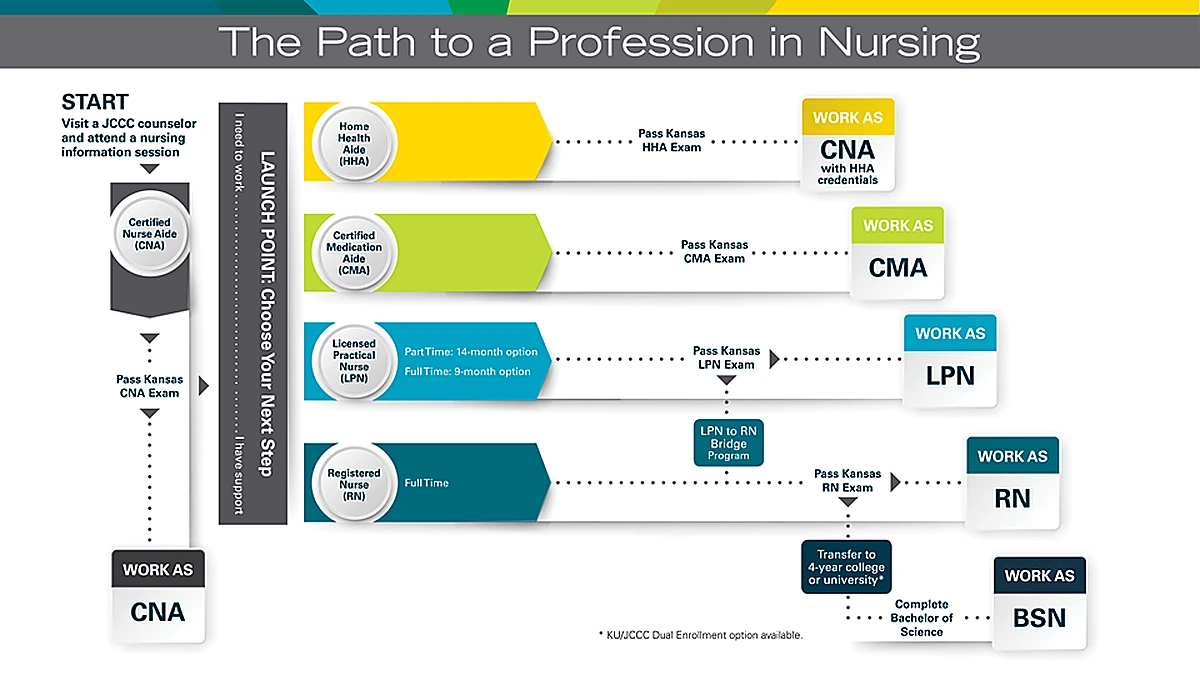
For most people, going straight to RN is faster and cheaper overall, and it avoids sitting two separate licensing exams. LPN-first only clearly wins in a few specific situations. These are mainly funding, timing, and local programme access.
What Working Nurses Actually Say (Not What You’d Expect)
When we put this question to a large group of practising RNs and LPNs online, most respondents preferred the direct RN pathway.
Key Takeaways
● Nurses who bridged later often said they wished they had not waited. One ICU nurse described increasing earnings from roughly $21 per hour as an LPN to $36 per hour as an RN.
● Several nurses pointed out that LPN programmes are often only one semester shorter than the RN track at the same school. Therefore, the time you save is smaller than most people assume.
● More than one nurse who bridged years later said life simply got in the way. Kids, work, and comfort all played a part, and the bridge kept getting pushed back.
● The nurses who did recommend LPN first usually gave one reason: funding. If a grant, scholarship, or employer would pay for LPN training but not RN training, that changed the maths completely.
● A few nurses mentioned local RN programmes with two to four year waitlists and lottery admissions. Here, an LPN credential offered a faster way into a bridge seat than waiting in the general RN applicant pool.
Only 8% of LPNs Ever Bridge
Evidence from research has shown that LPN pathway is often out of necessity or personal decision. Jones, Toles, Knafl, and Beeber (2017) published this study in Nursing Outlook. They tracked 39,398 LPNs licensed in North Carolina between 2001 and 2013. Of that group, only 3,161 (about 8%) completed the move to RN.
The researchers found some LPNs were more likely to bridge than others. This included LPNs who were male, from a racial group other than white, and younger when they first became licensed. It also included LPNs working in a hospital or med-surg unit (a medical-surgical ward), working part-time, or working in a rural area.
According to the scholars, without support from employers and schools, LPNs remain what the researchers called an “untapped resource” for growing the RN workforce.
This does not mean bridging is a bad idea. It means the plan to “LPN first, bridge later” is one that most people never finish. If you are not fairly confident you will follow through on the bridge, this should be a major factor in your decision.
“It Will Be Easier the Second Time” Is Not Really True
A common argument for LPN first is that you have already done this before, so RN school should feel like a repeat. Current research does not strongly support that assumption.
● Goodwin-Esola and Gallagher-Ford (2009) describe the LPN-to-RN transition as a difficult process. This was published in the Journal for Nurses in Staff Development. Nurses making the move commonly report feeling afraid, inadequate, and uncertain. They do not simply feel relief from familiar material.
● Cornine, Crawford, and Sullivan-Bolyai (2023) surveyed 873 LPN-to-RN students across 37 states, published in Nursing Education Perspectives. The top obstacles were personal stress and trouble balancing school with other responsibilities. Faculty support and recognition of prior LPN experience were among the least common sources of help. Many students felt their background was not actually being used.
● Diaz, Elwell, Rigolosi, and Proto (2024) surveyed 1,424 Connecticut LPNs for the Journal of Professional Nursing. Their top barriers to a BSN were their financial position (76.4%), personal responsibilities (71.1%), and having to repeat coursework they had already completed (65.9%).
● Cook and colleagues (2010), writing in Teaching and Learning in Nursing, found that LPN-to-RN students face a real shift in identity. They are not just learning new material. They are also learning to be a student again after working as a licensed nurse.
From the studies, prior LPN experience is a nursing asset in clinical placements. However, it does not remove the financial pressure, time strain, or self-doubt that comes with going back to school as a working adult. Plan properly for your BSN and do not make assumptions based on your LPN experience.
Bridge Graduates Are Not Better Prepared RNs than Direct-Entry RNs
Birkhead, Araldi, and Cummings (2009) reviewed how LPN-to-RN bridge programmes are set up, published in the Journal for Nurses in Staff Development. They found no real difference in NCLEX preparedness between fast-tracked bridge graduates and standard direct-entry RN graduates. At the same time, bridge students did show consistent completion and pass rates, so the programmes do work. However, the data does not support the idea that LPN experience alone produces a stronger RN.
In other words, bridge programmes are a good way to skip coursework you have already done. Except, they are not proof that the LPN route builds a better nurse.
The Numbers: Pay, Pass Rates, Cost, and Time
Wages (BLS, May 2025 National Data)
|
Role |
National Median Annual Wage |
Notes |
|
Licensed Practical / Vocational Nurse |
$64,400 |
|
|
Registered Nurse |
$97,550 |
SOC 29-1141. About 3.38 million employed RNs. 10th to 90th percentile: $68,940 to $137,470. |
There is roughly a $33,000 difference between the national median wages. Worth noting, RN pay changes widely by state. It runs from roughly $140,270 median in California down to well under $80,000 in lower cost states. Check your own state’s numbers before treating either figure as fact.
NCLEX Pass Rates (NCSBN, 2025)
|
Exam |
First-Time, US-Educated Pass Rate |
2025 Candidates |
|
NCLEX-RN (the licensing exam for RNs) |
86.7% |
192,916 tested. 167,272 passed. |
|
NCLEX-PN (the exam LPNs already passed) |
86.6% |
N/A |
|
NCLEX-RN, all candidate types |
69.1% (down from 73.3% in 2024) |
Includes repeat test-takers and internationally educated candidates. |
First-time, US-educated pass rates are nearly the same for both exams. So the idea that “the RN exam is much harder” is not really supported once you compare the same type of candidate. State-level RN pass rates ranged from 92.9% in North Dakota to 77.8% in Alaska in 2025. This shows that your programme and location matter more than the exam itself.
If you are preparing for the exam, our guide to choosing an NCLEX-RN or NCLEX-PN prep resource can help. Our breakdown of the 2026 NCLEX test plan changes can help too.
Programme Cost and Timeline
|
Bridge / Programme Type |
Typical Total Cost |
Typical Timeline |
|
Community college LPN-to-ADN |
$6,000–$15,000 |
12–18 months |
|
University LPN-to-BSN |
$15,000–$35,000 |
2.5–3 years |
|
Online/hybrid bridge programmes |
$10,000–$25,000 |
12–24 months |
Note: These figures come from individual school and programme pages. Treat them as rough ranges, and confirm the actual cost and timeline with any specific programme before you enrol.
Institutions Currently Offering LPN-to-RN Bridge Programmes
These are some of the schools currently running LPN-to-RN (or LPN-to-BSN) bridge tracks across the USA. The mix includes community colleges, university online tracks, and hybrid programmes. Availability, start dates, and residency rules change often, so confirm the current details directly with each school before you apply.
● Piedmont Virginia Community College (Charlottesville, VA): On-campus AAS bridge, NCLEX-RN eligible on completion. View programme page
● Northshore Technical Community College (Hammond, LA): 68-credit ASN bridge cohort admitted each summer. View programme page
● Wayne County Community College District (Detroit, MI): AAS bridge programme with multiple metro-Detroit campus locations. View programme page
● Lane Community College (Eugene, OR): Accelerated bridge building directly on LPN coursework, with a pathway into RN-to-BSN. View programme page
● Lehigh Carbon Community College (Schnecksville, PA): AAS transition programme with built-in ATI NCLEX-RN review. View programme page
● Johnson County Community College (Overland Park, KS): Selective-admission bridge, NCLEX-RN eligible after three semesters plus general education. View programme page
● Community College of Denver (Denver, CO): LPN-to-BSN bridge, the first in the Colorado Community College System. View programme page
● Indiana State University (Terre Haute, IN, fully online): Online LPN/LVN-to-BSN track. Clinicals are arranged in your own community, so no campus visits are required. View programme page
● Arkansas Tech University, Ozark Campus (Ozark, AR, hybrid): AAS-RN track with half of nursing theory online and half in classroom lectures. View programme page
● WVJC School of Nursing (Charleston, Beckley, and Bridgeport, WV, online/hybrid): 14-month ADN bridge with online coursework and in-person labs and clinicals. View programme page
Note: Many states have several LPN-to-RN bridge options at local community and technical colleges. Search your state board of nursing’s approved programme list to find options near you.
Which Nursing Path is Right for You?
Before making a decision, ask yourself these questions:
Go LPN-First when-
● Funding only covers LPN training. A grant, scholarship, or programme you qualify for pays for LPN training but not RN training, and paying full price for RN school is not realistic for you right now.
● You need income within the next year. LPN median pay is $64,400 a year nationally, well above minimum wage, and getting licensed faster gets money coming in sooner.
● Your local RN programmes have long waitlists, but LPN does not. Several nurses described RN waitlists of two to four years, with much shorter or no waits for LPN. In that case, LPN then bridge can genuinely be the faster route overall.
● Your employer will pay for the bridge. Tuition help for LPN-to-RN is common enough that it is worth asking about directly, and it can change the whole cost picture.
● You are not fully sure nursing is for you. An LPN programme is a lower-risk way to test the field. You invest one year rather than two to four before you commit further.
Go Straight to RN If:
● You can access funding, family support, or loans for a direct RN programme. This is usually the faster and cheaper path to the licence and pay most people want.
● Your local LPN and RN programmes are similar lengths. In some colleges nurses LPN nurses only saves about one semester at their school. If that is true for you too, the time you save mostly disappears once you add the bridge programme on top.
● You want to be licensed once, not twice. Every extra licence brings its own cost, exam, and paperwork.
● You are not confident you would actually follow through on the bridge later. Remember, only about 8% of LPNs in the largest tracked study ever completed the move to RN. If life gets busy, “LPN now, bridge later” can quietly become just “LPN.”
Bottom Line
The evidence supports the direct RN pathway. The transition from LPN to RN can be stressful and not a simple repeat. In addition, bridge graduates are not better prepared than direct-entry RNs whether in exam or clinical skills.
Unless funding, waitlists, or income timing push you towards LPN-first, going straight to RN is the path that both the data and most working nurses point towards.
Frequently Asked Questions about LPN to RN Bridging
Is an LPN-to-RN bridge harder than a direct-entry RN programme?
Not academically harder, but the research shows it is not easier either. Bridge students report real personal stress, and many feel their LPN background is not fully recognised by teaching staff. Treat it as its own challenge. Do not treat it as an easy shortcut through work you have already mastered.
Does an ADN-RN pay the same as a BSN-RN?
Scope of practice is the same for both, and pay is usually close. Several nurses described only a small hourly gap between the two. The bigger difference shows up in management roles and some Magnet hospitals’ BSN rules (Magnet status is a top nursing quality award). These rules often come with a grace period of a few years, plus tuition help to complete the degree.
How much time does bridging save?
It depends entirely on your local programmes, so check before you assume anything. Several nurses reported that LPN programmes were only about one semester shorter than RN programmes at the same school, which removes most of the time advantage once you add the bridge programme on top. Other nurses found LPN entry was much faster because of RN programme waitlists. Your local school’s admissions office can give you a real answer here. A forum cannot.
What is an LPN to RN bridge programme?
An LPN to RN bridge programme is a nursing track for licensed practical nurses. It lets you skip coursework you have already done and earn an RN licence, either an ADN or a BSN. You get credit for what you already learned and did as an LPN. Most bridge programmes run 12 to 24 months, instead of the two to four years a direct-entry RN programme takes. Every path ends with the same NCLEX-RN exam that all RNs must pass.
How long does an LPN to RN bridge programme take?
Most LPN to RN bridge programmes take 12 to 24 months. Community college LPN-to-ADN tracks run about 12 to 18 months. University LPN-to-BSN tracks run two and a half to three years. Online and hybrid bridges run 12 to 24 months. Your real timeline depends on the prerequisites you still need, how many credits your school accepts for your LPN coursework, and whether you study full time or part time. Always confirm the real number with the specific programme’s admissions office.
How much does an LPN to RN bridge programme cost?
LPN to RN bridge programmes typically cost $6,000 to $15,000 at a community college for an LPN-to-ADN track. A university LPN-to-BSN track typically costs $15,000 to $35,000. An online or hybrid bridge typically costs $10,000 to $25,000. These are rough ranges from school and programme pages, not peer-reviewed data. Ask any programme you are considering for its current, full tuition and fee total before you enrol.
What Percentage of LPNs Actually Complete the Bridge to RN?
Only about 8% of LPNs ever complete the bridge to RN. This comes from Jones et al. (2018), which tracked 39,398 LPNs licensed in North Carolina from 2001 to 2013. Only 3,161 of them made the move to RN. If you are leaning towards “LPN now, bridge later,” this statistic is the strongest reason to lock in a real bridge plan, with a start date, before you commit to the LPN-first route.
Should I work as an LPN for a while before starting the bridge, or go straight into it?
This is one of the most common questions on nursing forums. There is no single right answer. It is a trade-off. Working first lets you pay down debt, confirm that you like nursing, and build clinical experience before RN school. Going straight into the bridge gets you to RN pay sooner, and it avoids a real risk shown in the research: most LPNs who plan to “bridge later” never do. If you choose to work first, pick a target start date in advance. Do not leave it open-ended.
Can I do an LPN to RN bridge programme fully online?
Partly. Classroom-style coursework, such as lectures, exams, and care planning, can usually be done online. But every accredited LPN to RN bridge still needs in-person or local clinical hours, because a state board will not license an RN who has never practised hands-on skills under supervision. Be careful of any programme that claims a fully online path to RN licensure with no clinical hours at all. Nursing forums often flag these as unaccredited or not recognised by state boards.
Will my LPN experience count for credit in an RN programme?
Usually yes, but only in part. Most bridge programmes give credit, or a challenge exam exemption, for basic nursing courses you already covered as an LPN. This is what shortens your timeline. That said, Cornine et al. (2023) found that many bridge students felt their prior LPN experience was not fully recognised by teaching staff in practice. So confirm exactly which courses transfer in writing before you enrol. Do not simply assume.
What is the difference between an LPN to RN bridge and an LPN to BSN programme?
An LPN-to-RN bridge usually means an LPN-to-ADN track. This is an associate degree route, and it is shorter and cheaper, typically 12 to 18 months. An LPN-to-BSN programme takes longer, at two and a half to three years, and costs more. But a bachelor’s degree is often needed for management roles, and it is preferred or required by some Magnet-status hospitals. Both paths end with the same NCLEX-RN exam and the same RN licence.
Will my employer pay for an LPN to RN bridge programme?
Many employers do offer tuition help for LPN-to-RN bridging, especially hospitals and long-term care facilities facing RN shortages. This is rarely advertised, so you usually need to ask HR or your manager directly. Some employers tie this benefit to a work commitment after you graduate, so read the terms carefully before you rely on it to fund your programme.
Book a free 30-minute consultation with UK Nurses to talk through your own nursing pathway