How to Answer NCLEX Bowtie Questions
Taking NCLEX exam with confidence is every student’s ream.
|
KEY TAKEAWAYS |
Bowtie questions look difficult because the five choices must work together.
My approach is simple: find the condition that explains the cues, match your actions to the patient’s stability, and choose monitoring findings that tell you whether care is working.
In a case of atrial-fibrillation, for example,
First, spot the seven-distractor patterns and practise with two more bowties.
Remember, no single technique guarantees a pass; however, a repeat clinical-reasoning process makes practice more productive.
What is a Bowtie Question on the Next Gen NCLEX?
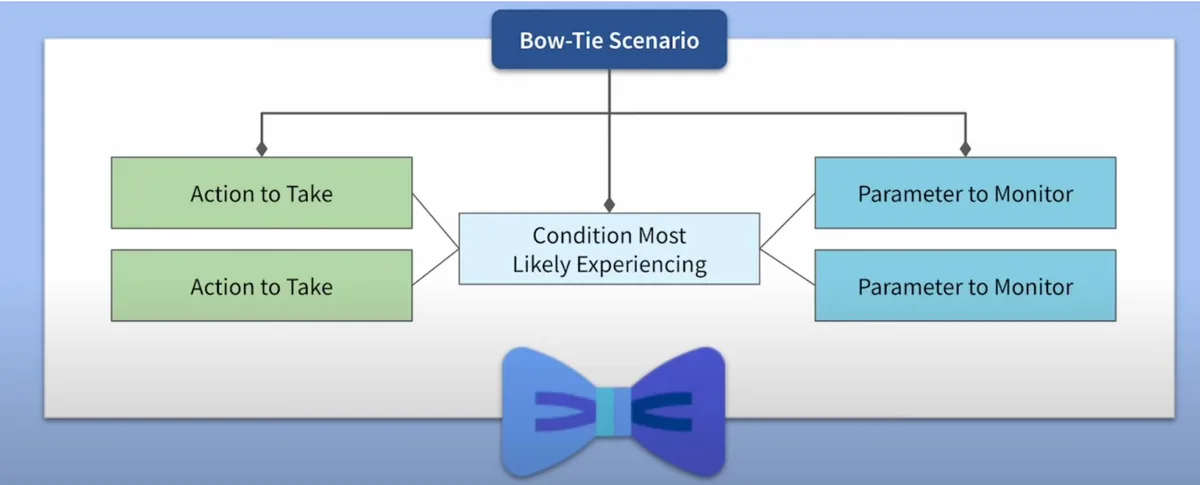
The bowtie is a stand-alone Next Generation NCLEX (NGN) clinical judgment item. It has the following components:
• Left wing: Actions to take. Pick 2. This answers, “What do I do?”
• Centre: Potential condition. Pick 1. This answers “What is going on?”
• Right wing: Parameters to monitor. Pick 2. This answers, “How will I know it is working or getting worse?”
Bowties lean mainly on three steps of the NCSBN Clinical Judgment Measurement Model: prioritising hypotheses (the condition), taking actions (the left wing) and evaluating outcomes (the right wing). A student still have to recognise and analyse the cues to get there.
In another definition, nurse Educators Simpson, Boev and Dambaugh describe bowtie and trend items as questions requiring a student to combine several aspects of the clinical judgment model in a single answer. Bowties are stand-alone items, so you will not meet them inside the three case studies.
How are NCLEX bowtie questions scored?
Based on NCSBN, Bow time questions has a maximum of five point. Each has a correct answer position. Bowties use 0/1 scoring, therefore an incorrect selection does not subtract from points earned in other positions and a test taker must fill all the five slots.
Worth noting, NGN item types may use different partial-credit rules.
Normally, multiple-response questions use plus/minus scoring, however, with bowtie selections are scored by their five positions.
|
Order of solving bowtie: Start with centre first, then the left wing, then the right wing. Remember if you get the condition wrong, everything else collapses, because the same wrong answer is usually a correct nursing action for a different patient. |
The Pair-and-Prove Method
How to Answer a Bowtie Question in Six Steps
I teach students to link the answer into one chain: Patient cues → likely condition → immediate actions → results to monitor.
1. Build a cue ledger (30 seconds). List three to five cues in three groups: what is abnormal, what threatens airway, breathing or circulation, and what is missing (blood pressure, SpO2, mental status, pain or a lab value).
2. Name the condition with a because-sentence. “It is ___ because ___, ___ and ___.” If you cannot give three cues, you do not have it yet. Then ask what each of the other two condition options fails to explain.
3. Make the stability call. Is this client stable or unstable, and which cue tells you? Unstable clients need immediate stabilising actions first.
4. Choose actions that treat or stabilise, now. For each option, ask: does this treat or stabilise the condition I named, in this client, right now? Where you can, pick one action that treats or stabilises and one that confirms or protects.
5. Choose parameters that prove or protect. For each action, name the number or finding that would change if it worked. Pick the parameters that best prove your actions, or one that proves and one that protects against the treatment’s main danger (insulin and potassium, for example).
6. Run the chain check (15 seconds). Say it in your head: “Because it is X, I do A and B, and I will know it worked if C and D change.” If a link will not hold, that pick is wrong.
Worked Example
A Bowtie Question on Atrial Fibrillation
A 64-year-old reports a racing heartbeat and mild light-headedness. The monitor shows an irregularly irregular narrow-complex rhythm at 142/min. BP 118/72 mmHg, SpO₂ 97% on room air; the client is alert, speaking in full sentences, with no chest pain, acute dyspnea or signs of shock. No history of pre-excitation or reduced ejection fraction is reported.
Which condition, two actions and two parameters best fit.
Centre: Atrial fibrillation with rapid response
Answer: Atrial fibrillation with rapid ventricular response (AF with RVR). The rapid, irregularly irregular rhythm and palpitations fit AF better than regular supraventricular tachycardia or a typical sustained monomorphic ventricular tachycardia. A 12-lead ECG is needed to confirm the rhythm.
Stability call
This client is presently hemodynamically stable: BP is 118/72, mental status is normal and there are no ischemic symptoms, acute heart failure or shock. New hypotension, altered mental status, ischemic chest discomfort or acute heart failure would change priorities and may call for urgent synchronized cardioversion.
Left wing: Choose two actions
1. Obtain a 12-lead ECG. Confirm the rhythm and assess QRS characteristics before treatment.
2. Prepare to administer prescribed IV rate-control medication after confirming blood pressure, ECG findings and contraindications. In this hypothetical option bank, IV verapamil is the rate-control choice for this stable patient; it is not appropriate for every AF presentation.
Do not choose immediate synchronized cardioversion. A cardiac stress test and incentive spirometry do not address the immediate problem. If the same patient became unstable, the correct action set could change.
Right wing: choose two parameters to monitor
• 1. Heart rate and rhythm. These show whether ventricular rate control is working and whether the rhythm changes.
• 2. Blood pressure. Rate-control medication can lower blood pressure, so this is a direct safety and perfusion measure.
• Other assessments remain clinically relevant, but these two options most directly track the chosen treatment and its immediate safety in this specified scenario.
Final five-slot answer:
Condition—atrial fibrillation with rapid ventricular response
Actions—12-lead ECG and prescribed IV verapamil after safety checks
Monitor—heart rate/rhythm and blood pressure.
My chain check: “The cues point to stable AF with RVR; I confirm the rhythm and prepare rate control; I track rate and blood pressure.”
Seven Ways Bowtie Wrong Answers Are Built
Most wrong options are good nursing practice for a different patient or a different moment.
When you eliminate an option, remember to name the pattern.
|
Pattern |
What it looks like |
Example |
Your filter |
|
1. Right action, wrong condition |
Correct for a neighbouring diagnosis |
Incentive spirometry for atrial fibrillation |
Does it treat the condition in my because-sentence? |
|
2. Right action, wrong stability |
Too aggressive or too passive for how sick the client is |
Immediate cardioversion for hemodynamically stable AF; waiting to reassess an unstable client |
Stable or unstable, and does the intensity match? |
|
3. Wrong purpose or place |
A test or plan for a stable outpatient |
Cardiac stress test for an acutely symptomatic client |
Will the result change what I do in the next 10 minutes? |
|
4. Too slow |
A real measure that moves over days |
Daily weight for an acute bleed |
Does it change as fast as the problem? |
|
5. True but indirect |
Sensible monitoring that does not track this problem |
Chest X-ray when no cue points to the lungs |
Is it the most direct measure of the condition or my action? |
|
6. Opposite or harmful |
Makes the named condition worse |
IV saline bolus in pulmonary edema |
Would it worsen the condition I named? |
|
7. Comfort or teaching while physiology is threatened |
Kind, but not now |
Encouraging oral fluids for an unstable client |
Physiologic threats first |
When two options both look good, pick the one more specific to your condition, then the one you can measure sooner.
For parameters, prefer the one tied to an action you already chose.
NCLEX Bowtie Cheat Sheet
Use this for recall practice. This is my study scaffold, not a clinical protocol.
The item stem and options always win, and you should check drugs and doses against a current reference.
|
Condition |
Cues |
Typical best actions |
Typical best parameters |
|
Atrial fibrillation with rapid response |
Irregular pulse, palpitations, faintness, HR above 100 |
Confirm rhythm and stability; rate control if ordered and appropriate; urgent synchronized cardioversion if unstable |
Heart rate/rhythm; BP; mental status; treatment response |
|
Acute decompensated heart failure |
Orthopnea, crackles, rapid weight gain, edema, low SpO2 |
Upright position; oxygen; IV loop diuretic |
SpO2; lung sounds; urine output |
|
Acute coronary syndrome |
Chest pressure, sweating, nausea, ST changes |
Urgent ECG; aspirin when indicated; oxygen for hypoxemia; other treatment per orders and contraindications |
Serial troponin; ECG changes; pain rating; BP |
|
Hypovolemic shock or hemorrhage |
Fast pulse, falling BP, cool clammy skin, bleeding, low urine output |
Control bleeding; large-bore IV; IV fluids or blood as ordered |
BP and HR; hourly urine output; hemoglobin; LOC |
|
Sepsis |
Fever or low temperature, HR above 90, RR above 20, confusion, infection source, low BP |
Prompt clinical escalation; cultures when feasible without delaying antibiotics; prescribed antimicrobials and appropriate fluid resuscitation |
Lactate; BP or MAP; hourly urine output; mental status |
|
Diabetic ketoacidosis |
Kussmaul breathing, fruity breath, very high glucose, ketones |
IV isotonic fluids; IV insulin; potassium guided by labs |
Serum potassium; hourly glucose; pH and anion gap; urine output |
|
Hypoglycemia |
Shakiness, sweating, confusion, glucose below 70 mg/dL |
15 g fast carbohydrate if alert; IV dextrose or glucagon if not |
Glucose recheck in 15 minutes; LOC |
|
Pulmonary embolism |
Sudden dyspnea, pleuritic pain, fast HR, recent surgery or immobility |
Oxygen; raise head of bed; anticoagulation as ordered |
SpO2; HR and RR; bleeding signs and coagulation labs |
|
Acute ischemic stroke |
Facial droop, arm weakness, speech change, known last-well time |
Activate stroke pathway; determine last-known-well time; rapid brain imaging; assess glucose and swallow safety |
Neuro checks; BP; glucose |
|
Hyperkalemia |
Weakness, peaked T waves, arrhythmia, high potassium |
Continuous ECG; urgent calcium for ECG changes as ordered; insulin/dextrose and potassium removal as indicated |
ECG rhythm; serum potassium; glucose |
|
Severe preeclampsia |
High BP, headache, visual changes, hyperreflexia, proteinuria |
Magnesium sulfate; seizure precautions; antihypertensive as ordered |
BP; reflexes; RR; urine output; magnesium level |
|
Anaphylaxis |
Exposure, hives, wheeze or stridor, swelling, low BP |
Give IM epinephrine promptly; stop exposure; support airway and circulation; activate emergency response |
BP; SpO2 and respiratory status; HR |
NGN Bowtie Practice Questions
Try these two drills
Question 1
A 72-year-old with heart failure reports worsening shortness of breath and sleeping on three pillows. Weight up 3 kg in two days. Crackles to mid-lung fields, 3+ ankle edema, SpO2 88% on room air, RR 28.
Condition: acute decompensated heart failure with pulmonary edema; community-acquired pneumonia; pulmonary embolism.
Actions: IV furosemide as prescribed; raise head of bed to high Fowler’s; infuse a 1 L normal saline bolus; encourage oral fluids to 3 L a day; place the client flat to rest.
Parameters: oxygen saturation; lung sounds; bowel sounds; blood glucose; pupil response.
Question 2
A 24-year-old ten minutes into a first IV dose of penicillin. Hives across the chest, lip swelling, audible wheeze, hoarse voice. BP 78/44, HR 130, SpO2 89%.
Condition: anaphylaxis; asthma exacerbation; vasovagal syncope.
Actions: stop the infusion; IM epinephrine as prescribed; oral diphenhydramine and reassess in 30 minutes; cold compress to the hives; document the reaction and continue to monitor.
Parameters: blood pressure; oxygen saturation; urine specific gravity; bowel sounds; serum glucose.
Answer
Question 1
Acute decompensated heart failure; IV furosemide and high Fowler’s; oxygen saturation and lung sounds.
Weight gain, crackles, orthopnea and edema point to fluid overload, so the saline bolus, oral fluids and lying flat all make it worse (pattern 6). Pneumonia has no fever or infection cue.
Question 2
Aanaphylaxis; stop the infusion and give IM epinephrine; blood pressure and oxygen saturation.
New drug exposure with hives, swelling, wheeze and shock is anaphylaxis. Stop the trigger and give IM epinephrine first.
Oral diphenhydramine is an adjunct and too slow on its own (pattern 2), and a cold compress treats the least dangerous cue (pattern 7).
NCLEX Bowtie Test Rules
• Know the format. The NCLEX-RN is computer adaptive, with 85 to 150 items and up to five hours allowed. Once you submit an answer, you cannot go back to it, so settle each answer before you move on. Our NCLEX-RN exam guide covers the full format.
• Budget your time. Bowties are slower than most items. Elsevier’s data shows they can take twice as long as or longer than other NGN item types. In practice, start at about four minutes each and work towards three, and cap the condition decision at about 90 seconds. If it is still unclear, list the cues, choose the condition that explains the most of them and move on.
• Read in a fixed order. Instruction line, notes and vital signs, condition options, and only then the action and parameter banks.
• Fill all five slots. An empty slot cannot earn credit. Break ties with the pairing rule: choose a parameter tied to an action you already picked.
• Rehearse the drag-and-drop interface. NCSBN publishes sample NGN items and an NCLEX tutorial. Find the current versions on NCLEX.com.
• Expect uncertainty. NCLEX is computer adaptive, and you cannot reliably identify whether an item is scored or unscored. Treat every presented question as important; the difficulty of an item is not evidence that you passed or failed.
• Reset between items. One slow breath, eyes off the screen for two seconds, and a fresh cue ledger.
A Bowtie Study Plan You Can Actually Keep Up
Short, well-reviewed sessions beat marathon cramming.
I am yet to find a controlled study showing that one method raises NCLEX pass rates, therefore treat all suggestions as personal opinions, not a guarantee.
For memory techniques that pair well with self-testing, see our guide to nursing exam memorisation techniques.
The 30-30-10 daily session (about 70 minutes)
1. 30 minutes of mixed practice. Four to six bowties across different body systems. Start with untimed at first and timed later.
2. 30 minutes of review. For every item, hit or miss, say the because-sentence, name each wrong option’s pattern from the seven-pattern table and write one correction sentence.
3. 10 minutes of blank-page recall. Without notes, rebuild yesterday has missed conditions: cues, two actions, two parameters.
Space your misses
Re-test each missed concept with a fresh item on day 2 or 3, day 7 and day 21. A concept leaves your log only after you pass it twice in a row.
Keep an error log
One row per miss: date, topic, the condition, error type (content, reasoning or reading), distractor pattern number, your one-sentence fix and re-test dates.
Each week, the most common error type decides what you work on next. If you are still choosing a question bank, our framework for choosing an NCLEX prep resource can save you money.
Five deeply reviewed bowties beat twenty skimmed ones.
Protect your sleep, and avoid new heavy content in the two days before the exam. If anxiety is disrupting your sleep, studying or exam attempts, talk to your school’s counselling or student health service.
Are You Ready to Sit the NCLEX?
I recommend these four study check-ins before choosing a test date.
1. Method. You can run the six Pair-and-Prove steps aloud on a new bowtie and name the pattern of every wrong option.
2. Practice performance. You consistently reach the readiness level your question bank publishes (UWorld, for example, cites 70% as a benchmark), and you pick the correct condition on at least 80% of items across three mixed sets of ten or more bowties.
3. Independent readiness test. You score “High” or equivalent on a validated self-assessment, confirmed on a second form taken at least a week later.
4. Content coverage. There is no Client Needs category where you keep scoring low. Our guide to the 2026 NCLEX test plan changes explains the categories, and the official 2026 NCLEX-RN test plan has the detail.
If your clinical judgment or content coverage is still inconsistent, address those gaps before scheduling. Our NCLEX-RN guide and registration-pathways guide can help.
Bowtie NCLEX Questions: FAQs
What is a bowtie question on the NCLEX?
A bowtie is a stand-alone Next Gen NCLEX item in which you drag five answers into a bowtie-shaped diagram: one potential condition in the centre, two actions to take on the left and two parameters to monitor on the right. It tests whether you can link cues, a condition, actions and expected outcomes into one decision.
How do you answer a bowtie question on the NCLEX?
Decide the condition first, using a because-sentence with three cues. Make a stability call, pick two actions that treat or stabilise now, then pick two parameters that prove those actions worked or protect against their main danger. Finish with a chain check: “Because it is X, I do A and B, and I will know it worked if C and D change.”
How are NCLEX bowtie questions scored?
A bowtie is worth up to five points, with one point for each correct slot under the 0/1 scoring rule. Incorrect choices do not erase credit earned in other positions.
Should I fill all five slots on a bowtie question?
Yes. An empty slot cannot earn credit, and bowties are not reported to penalise wrong picks. This differs from plus/minus items, where wrong selections can cost you points.
How long should I spend on a bowtie question?
Elsevier’s data suggests bowties can take twice as long as other NGN item types. I coach students to aim for about four minutes while learning and work towards three, with no more than about 90 seconds on the condition decision. These are my guidelines, not NCSBN limits.
How many bowtie questions are on the NCLEX?
There is no fixed number of bowties. NCSBN’s 2026 test plan specifies three six-item clinical judgment case studies plus approximately 10% stand-alone clinical judgment items, depending on examination length. Bowtie and trend are among the stand-alone formats; 10% does NOT mean 10% bowties.
Can I pass the NCLEX if I get some bowtie questions wrong?
Yes. The exam is computer adaptive and decides pass or fail from your overall performance, so one missed item does not decide the result. Focus on reviewing why you missed it.
When am I ready to take the NCLEX?
Use evidence from several sources: consistent clinical reasoning, review of recurring errors, adequate coverage of client-needs content and a reputable readiness assessment. No single percentage or practice test guarantees that you will pass.
Is a bowtie question the same as an NGN case study?
No. Bowtie is a stand-alone clinical judgment item with five answer positions. An NGN case study is a linked set of questions based on a developing patient record.
What should I choose first in an NCLEX bowtie?
For many learners, identifying the likely condition first makes the action and monitoring choices easier. Check the entire scenario, especially signs of instability, before choosing the remaining slots.
What if two bowtie actions both seem correct?
Compare how directly each action addresses the identified condition and the patient’s immediate risks. Prefer options appropriate to the patient’s stability and the timing of the intervention—not merely actions that might help eventually.
Are bowtie questions on the NCLEX-PN too?
The NGN clinical judgment framework applies to NCLEX-RN and NCLEX-PN. Review the test plan for your specific examination and practise the expected nursing scope.
Where can I find official NGN bowtie sample questions?
Start with the official NCLEX Next Generation NCLEX resources and current test plans. Use third-party question banks as supplemental practice, not as a source of official exam items.
How do I study for bowties if English is not my first language?
Practise translating each stem into three short phrases: the most important cues, the immediate safety concern and the change you would monitor. Review recurring medical vocabulary and U.S. nursing terminology alongside clinical reasoning.
|
Want a tutor to build your NCLEX plan with you? Book a free consultation with UKNurses and get matched with a licensed NCLEX tutor for 1-on-1 online coaching built around your weak areas, your schedule and your test date. Prefer to chat? Message the team on WhatsApp. |
A strong bowtie answer tells one clinical story: the cues support the condition, the two actions fit the patient’s immediate needs, and the two parameters show response or deterioration.
Practise the reasoning, not a memorised set of five picks and then apply it to new scenarios.